
Most adults who start lifting split into two camps without realising it. One camp chased the barbell through classic bodybuilding programmes full of biceps curls, leg presses, and bench press pyramids. The other camp followed coaches on social media doing kettlebell swings, battle ropes, and single-leg drills. Both work. Both fail in different ways. The lifters who sustain results across decades are the ones who understand what each approach actually trains, why their bodies need both, and how to combine them intelligently. This guide explains the differences, the science underneath each style, and how to build a personalised programme that delivers strength, real-world capacity, and durability across the lifespan.
Understanding the Three Planes of Motion
Every human movement happens in one of three planes. The sagittal plane runs forward and backward and holds the body’s most familiar patterns: walking, squatting, biceps curls, and bench pressing. The frontal plane runs side to side and controls lateral movement: side lunges, lateral raises, and side shuffles. The transverse plane runs rotationally and governs twisting, throwing, turning, and most athletic movement. Traditional strength training lives almost entirely in the sagittal plane. Real life lives in all three.
The Sagittal Plane
Forward-and-backward movement. Squats, deadlifts, bench presses, biceps curls, triceps extensions, leg extensions, leg curls, and seated rows. The sagittal plane lets us push, pull, hinge, and squat in a perfectly straight line, and that is what most lifters train for years.
The Frontal Plane
Side-to-side movement. Lateral lunges, side planks, lateral raises, and lateral shuffles. The frontal plane keeps the hips, knees, and ankles aligned to handle single-leg loading. It is also where most falls and knees caving inwards happen.
The Transverse Plane
Rotational movement. Throws, swings, chops, reaches, turns, and most sport actions. The transverse plane is where the deep core, glutes, and shoulder stabilisers earn their keep. Most traditional programmes barely touch it.
The Reality of Human Movement: The Role of the Transverse Plane
Walk into any hawker centre in Singapore and observe real movement. People twist to dodge a trolley. They bend laterally to lift a crate. They reach up and across to grab a high shelf. They pivot on one foot to catch a child. Every one of those movements happens in the transverse plane or the frontal plane. Almost none of them happen in the pure sagittal plane that traditional strength training favours. Lifters who train only sagittally get strong in the gym but feel clumsy and fragile in life. Lifters who train across all three planes get strong in the gym and fluid outside it.
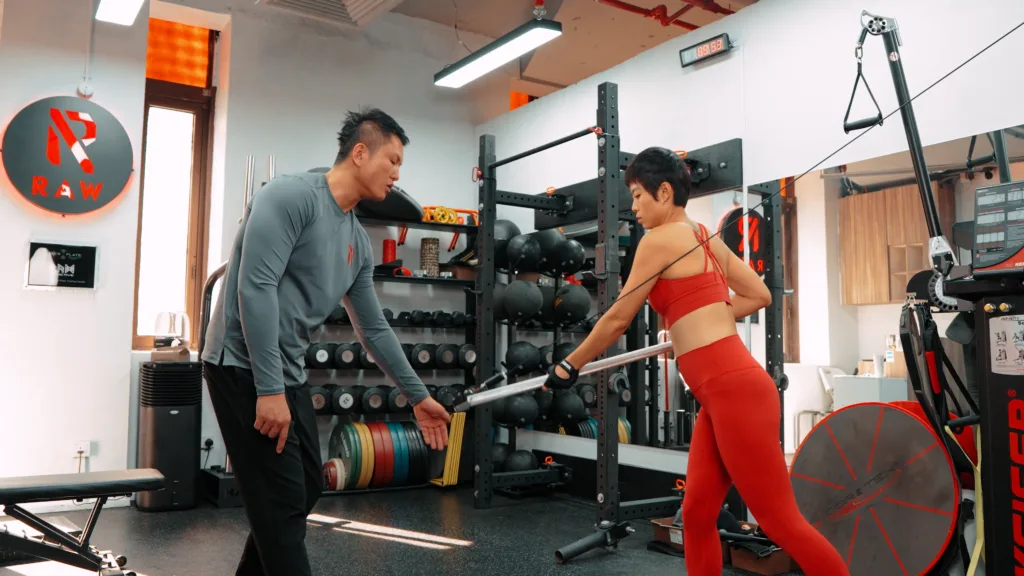
The Role of Gravity and the Spiral Force Concept
Gravity does not pull straight down on real human bodies. It pulls through bones, joints, and fascia along curved paths. Muscles and connective tissue pull in spirals to counter the downward force. Walking is a controlled fall. Running is a series of controlled falls. Throwing is a springing release of stored spiral tension. Without counter-spiral stability, the body cannot stand, walk, or move cleanly. Without transverse-plane training, lifters develop the strength to lift heavy but lose the elasticity to use it gracefully. That is why kettlebell swings, medicine ball throws, and cable rotations have an outsized place in any well-designed programme.
Traditional Strength Training: The Classic Approach
Traditional strength training focuses on maximal force production in well-defined patterns. The work centres on progressive overload in the sagittal plane: bench press, squat, deadlift, overhead press, row, and pull-up. The method grew out of powerlifting, bodybuilding, and Olympic weightlifting traditions, and it remains the most reliable way to build absolute strength, measurable hypertrophy, peak power, and clear one-rep-max progressions.
Characteristics of Traditional Strength Training
- Isolated or compound lifts: biceps curls, triceps extensions, leg presses, leg curls, leg extensions, bench presses, and rows all have a place.
- Sagittal-plane focus: most lifts move in a straight line forward and backward.
- Linear progression: weight climbs by small steps every week or every block. Numbers are easy to track.
- Maximal strength and hypertrophy: the strongest muscle-building stimulus available because heavy loads demand large motor unit recruitment.
- Measurable goals: bench press, squat, deadlift totals. Progress is testable, repeatable, and unambiguous.
- Lower global coordination demand: the body’s stabilising muscles work, but they are not the limiting factor.
For lifters in Singapore who want strong numbers on bodyweight movements, classic barbell work is the foundation. The RAW Active benefits of the bench press explainer covers the upper-body compound, the Bulgarian split squat guide covers lower-body unilateral work, and the incline pull-ups page covers a versatile vertical-pull drill.
Functional Strength Training: A Holistic Perspective
Functional strength training focuses on movement patterns rather than isolated muscles. The work centres on multi-planar drills that mimic real activities: lunging with rotation, kettlebell swings, medicine ball throws, sled pushes, TRX rows, single-leg work, and loaded carries. The method grew out of physical therapy, athletic conditioning, and applied functional science, and it remains the most efficient way to build balance, coordination, joint stability, and movement transfer into daily life and sport.
Characteristics of Functional Strength Training
- Multi-planar drills: rotational lunges, single-arm presses with reach, lateral lunges, kettlebell swings.
- Stability and core engagement: each rep demands continuous anti-rotation, anti-extension, and anti-tilt control.
- Unilateral elements: single-arm rows, single-leg deadlifts, single-arm overhead presses. Each side works on its own, exposing and fixing imbalances.
- Dynamic and time-efficient: most drills raise heart rate into the moderate aerobic zone, doubling cardio and strength in one circuit.
- Real-life transfer: walking carryovers, climbing, lifting objects, picking up children, getting out of a chair, stabilising a stumble.
- Scalable difficulty: bodyweight for beginners, kettlebells or dumbbells for intermediates, advanced drills for elite lifters.
Functional moves also serve as a useful check against the build-then-test cycle. A lifter who pushes the squat up steadily but cannot balance on one leg for 30 seconds is overloading strength at the expense of stability. The RAW Active functional training for balance page gives a focused balance programme, and the strength training fundamentals explainer shows where functional work fits.

The Science Behind Movement: Myofascial Connections
For most of the twentieth century, anatomy textbooks taught each muscle as if it operated in isolation. Real human bodies do not work that way. Muscles connect to bones, bones connect to fascia, fascia connects to other muscles, and the whole system creates linked slings that transmit force across the body. Thomas Myers named these twelve lines the Anatomy Trains myofascial meridians, and the model has reshaped how movement professionals understand exercise. The Superficial Back Line runs from the plantar fascia to the forehead. The Deep Front Line holds the body’s deep core together. The Spiral Line drives rotation. The Lateral Line controls side bending and pelvic tipping. When one link grips, the entire line carries the tension.
The practical upshot is significant. A lifter who complains of hamstring tightness may need to release the calves, the thoracolumbar fascia, and the suboccipitals to actually fix it. A lifter with chronic shoulder pain may need hip mobility work first. Traditional programmes that isolate single muscles miss these lines. Functional programmes that move through multiple segments hit them naturally. The RAW Active Anatomy Trains page explains the model in detail, and the recovery pyramid shows how myofascial release fits inside a complete programme.
Bridging the Gap: Combining Traditional and Functional Training
The smartest programmes blend both styles. Traditional lifts build the maximal strength and hypertrophy that anchor everything else. Functional drills step the body up through all three planes, train core stability, and transfer the strength to life and sport. Lifters who use only one style eventually hit a plateau. Lifters who blend both rarely do. The combination is what elite athletes actually programme, even when they call it by another name.
How to Integrate Both Training Styles
- Anchor with traditional lifts twice a week. Pick one squat, one hinge, one press, and one row. Track progress in kg and reps.
- Layer functional drills across the week. Add rotational lunges, kettlebell swings, loaded carries, single-leg work, and anti-rotation core drills.
- Train all three planes. Include sagittal (squat, hinge, push, pull), frontal (lateral lunge, side plank), and transverse (rotation, anti-rotation) work every week.
- Alternate dominant and balance lifts. Pair a heavy barbell press with a unilateral press with rotation. Pair a deadlift with a single-leg Romanian deadlift.
- Use recovery work between hard sessions. The recovery pyramid guides structure, sleep, hydration, breath, and mobility across the week.
- Programme the connection between drills. A squat warm-up that includes a kettlebell swing prepares the whole posterior chain better than a static stretch.
For lifters who want to alternate bilateral and unilateral work in detail, the bilateral vs unilateral guide explains how each style contributes to balanced strength.
A Sample Hybrid Week
- Monday: heavy barbell squat (5 sets of 5), push-up variations, plank finisher.
- Tuesday: kettlebell swings (5 sets of 10), rotational lunge (3 sets of 8 per side), loaded carry (3 sets of 30 metres).
- Wednesday: rest or light cardio.
- Thursday: bench press (4 sets of 6), single-arm row (3 sets of 10 per arm), Pallof press (3 sets of 12).
- Friday: deadlift (4 sets of 5), single-leg Romanian deadlift (3 sets of 8 per side), side plank (3 sets of 30 seconds).
- Saturday: outdoor conditioning. Long walk, hike, swim, or HYROX-style mixed session.
- Sunday: active recovery. Breath work, mobility, and a 20-minute walk.
For lifters targeting competitive conditioning events like HYROX, the RAW Active HYROX training Singapore page shows how traditional and functional lifts blend inside race prep.
The Importance of an Adaptive Learning Mindset
The biggest variable in any training outcome is the mind carrying it out. Lifters who train with an adaptive learning mindset stay open to new drills, programme intelligently across the year, and accept that progress is not linear. Lifters who train with a fixed mindset cling to routines that no longer serve them, ignore niggles, and plateau when life gets busy. The functional versus traditional decision is not a permanent identity. It is a tool selection that changes across the year.
Key Takeaways for Learning and Application
- Stay curious. Try unfamiliar drills within a structured plan. The adult learning methods page covers how adults learn movement skills fastest.
- Track progress with multiple metrics. Lift numbers, body composition, resting heart rate, sleep quality, and movement quality all matter.
- Cycle training emphasis. Two months of traditional hypertrophy, two months of functional capacity, four weeks of mobility, repeat.
- Respect recovery. The best programmes leave room for sleep, stress management, and active recovery days.
- Work with a coach. A good coach adjusts the plan based on data, not on assumptions about what the lifter should be doing.
- Avoid dogma. Both styles deliver real results when applied well. The lifters who insist one is fake usually stopped learning years ago.
For the broader learning context, RAW Active’s understanding mindful movement in Singapore explainer connects attention, breath, and movement quality across the week. The stop doing biceps curls like this guide is a useful reminder that technique matters more than the exercise’s reputation.
Who Each Style Suits Best
- Traditional training fits: powerlifters, hypertrophy-focused lifters, beginners building a base, strength athletes who want clear progress metrics.
- Functional training fits: athletes returning from injury, adults over 40, postpartum women, working professionals, sport-specific conditioning work, and lifters who feel bulking up has left them stiff.
- Hybrid training fits: the vast majority of working adults in Singapore. Two traditional lifts a week plus three functional sessions across the week produce the most durable results.
For specific population adaptations, the RAW Active strength training for women explainer addresses hormonal balance and pelvic floor considerations. The strength training and telomeres research summary covers cellular longevity outcomes from combined training.
Programming Progression and Recovery
Both styles demand thoughtful progression. Add load in small steps, track readiness, and respect the body’s signals. Traditional lifts can be loaded by 2.5 to 5 kg per week on compound movements. Functional drills can be progressed by adding reps, slowing tempo, increasing load, or moving from bilateral to unilateral. A weekly check-in with the lifter’s own observations (sleep, stress, soreness) keeps the plan honest. Pair progression with the recovery pyramid so that strain converts into adaptation rather than injury.
Nutrition and Hydration to Support Both Styles
Both training styles demand protein in the 1.6 to 2.0 grams per kilogram of bodyweight range. Hydration matters more in Singapore’s heat than in cooler climates, especially for high-sweat functional circuits. The RAW Active fitness and hydration page covers water intake, electrolyte timing, and Singapore-specific adjustments. For food choices that match the training demand, the high protein food in Singapore guide covers local options that fit any budget.
Common Mistakes When Mixing the Two Styles
- Hovering between drills without intent. Random drills build random results. Pick the plan, then pick the drills inside that plan.
- Skipping the warm-up. Multi-planar drills need a longer warm-up than pure bilateral work. Plan five to ten minutes of mobility before functional circuits.
- Ignoring asymmetries. Unilateral drills surface left-right gaps. Address them before piling on bilateral load. The bilateral vs unilateral page covers the trade-off in detail.
- Loading too fast. Functional drills recruit more stabilisers per rep. Use lighter loads than the lifter expects.
- Dropping one style entirely. The lifter who drops functional work over time feels stiffer, slips on coordination, and loses transfer to sport. The lifter who drops traditional work over time loses muscle mass and one-rep-max progressions.
Where RAW Active Programmes Fit
RAW Active’s personal training model in Singapore integrates both styles into one plan. The studio’s strength training block anchors the week with bilateral lifts and progressive overload. The functional block layers in transverse-plane work, loaded carries, single-leg drills, and rotation. Personalised programming accounts for travel, sleep, nutrition, and the calendar of a working professional. For lifters who want to scale conditioning alongside strength, the HYROX training in Singapore approach combines them in event-specific ways.
For lifters weighing whether to invest in coaching, the cost of personal training in Singapore guide breaks down session rates and package options. For broader context on the RAW Active philosophy, the holistic approach and holistic fitness pages explain how training, recovery, sleep, and mindset come together.
Studio Locations and Access
RAW Active operates two appointment-only studios in central Singapore. The Great World City studio and the Stevens Road studio both host full strength and conditioning programmes, with private training, group sessions, and InBody body composition scanning. Lifters near Orchard can compare best parking rates in Orchard for easy access. Programming works for executive schedules with early morning, evening, and weekend slots.
Conclusion: A Hybrid Model That Lasts
Functional strength training and traditional strength training are tools, not identities. Each one covers a blind spot the other leaves behind. Traditional work builds the absolute strength and muscle mass that anchor every other outcome. Functional work builds the balance, coordination, and transverse-plane control that transfer the strength to real life. The lifters who sustain results for decades move fluidly between the two. The lifters who insist on one camp eventually plateau or stall. RAW Active’s coaching philosophy preserves both, anchored by the recovery pyramid and the holistic approach to fitness that combines the two styles into one resilient system. For lifters ready to put the model into practice, book a free consultation at RAW Active Personal Training.
Frequently Asked Questions
What is the difference between functional and traditional strength training?
Traditional strength training focuses on isolated or compound lifts in the sagittal plane, building maximal strength and hypertrophy through progressive overload on movements like the bench press, squat, deadlift, and curl. Functional strength training focuses on multi-planar movements like rotational lunges, kettlebell swings, single-leg work, and loaded carries that mirror real life and develop coordination, balance, and core stability.
Which is better for fat loss?
Both contribute. Traditional lifts preserve lean mass during a deficit, while functional circuits raise heart rate and burn more total energy per session. The best plan uses both. For sequencing cardio around strength, the NEAT and energy balance page explains how daily movement stacks with training.
How often should I include functional drills each week?
Two to three functional sessions a week covers most adult lifters. Pair them with two traditional strength sessions and daily walking for a complete week.
Do I need to choose one style?
No. The lifter who integrates both builds more durable strength than the lifter who picks one camp. The plan should cycle across the year rather than freeze in one style.
Are functional moves safer than traditional lifts?
Not automatically. Functional drills often demand more balance and core control, so the risk of compensation can be higher if technique is sloppy. Both styles demand respect for the body’s signals and proper progression.
Can I do functional training with no equipment?
Yes. Bodyweight drills like lunges, single-leg Romanian deadlifts, push-ups, anti-rotation planks, and jumping patterns are all functional and entirely equipment-free.
How does myofascial science change programming?
The myofascial model says muscles work in linked chains rather than in isolation. Programming then aims to load chains, not isolated muscles. Kettlebell swings and deadlifts both train the posterior chain. TRX rows and single-arm presses both train the upper-body slings. The Anatomy Trains explainer goes deeper.
Is transverse-plane training safe for beginners?
Yes, when load is light and technique is coached. Beginners should start with low-load rotational patterns such as Pallof presses, half-kneeling chops, and side planks before progressing to heavier rotational drills.
What role does recovery play in a hybrid plan?
Recovery makes the whole plan work. Sleep, hydration, mobility, breath work, and stress management are the foundation that lets both styles convert into adaptation. The recovery pyramid is a clean framework to apply across the week.
Where can I train this hybrid style in Singapore?
RAW Active offers both styles at the Great World City and Stevens Road studios, with personalised programming across traditional and functional work.