
TL;DR: Better bicep curls come from stricter technique, not heavier cheating reps. Keep your torso still, use a full elbow range, and hold a neutral wrist so the biceps do the work. Start lighter than your ego wants, control each rep, and stop if sharp pain shows up in the elbow, wrist, or lower back.
- What Is a Proper Bicep Curl?
- Why Bicep Curl Form Matters
- Why Swinging the Lower Back Is a Mistake
- Why Cutting the Range Short Is a Mistake
- Why Curling the Wrist Is a Mistake
- How to Do Bicep Curls Correctly
- Bicep Curl FAQ
What Is a Proper Bicep Curl?
A proper bicep curl is an elbow-flexion exercise where the biceps, not the lower back or forearms, create most of the work. Good form means a stable torso, a full but controlled range of motion, and a neutral wrist. The goal is better muscle tension, safer loading, and more useful reps.
The movement looks simple, but small technical errors can change where the stress goes. When the setup is clean, curls can be an effective way to build stronger arms without turning the exercise into a whole-body swing.
What Makes the Middle of the Curl Feel Hardest?
The middle of the curl often feels hardest because the weight is furthest from the elbow around ninety degrees of flexion. That increases the mechanical challenge and encourages the body to cheat. This is why many lifters start swinging, shortening the rep, or changing wrist position when fatigue builds.
Understanding that mid-range challenge helps you coach the lift better. Instead of forcing more load, you can slow the rep, stay upright, and keep the biceps working through the hardest point.
Why Bicep Curl Form Matters
Bicep curl form matters because technique decides whether tension stays in the biceps or leaks into the lower back, shoulders, and forearms. Cleaner reps usually improve training quality, reduce wasted motion, and make progression easier to track. Better form may also lower the chance of irritating joints and soft tissue.
If your curls feel mostly in the wrists, elbows, or lower back, the exercise is probably being performed in a way that limits its value. Small form fixes often produce a better arm stimulus without needing more weight.
- Better tension: Cleaner mechanics help the biceps stay loaded through more of the rep.
- Less compensation: The torso, wrist, and shoulders do not need to steal the movement.
- Safer progress: Controlled reps often support steady loading better than sloppy ones.
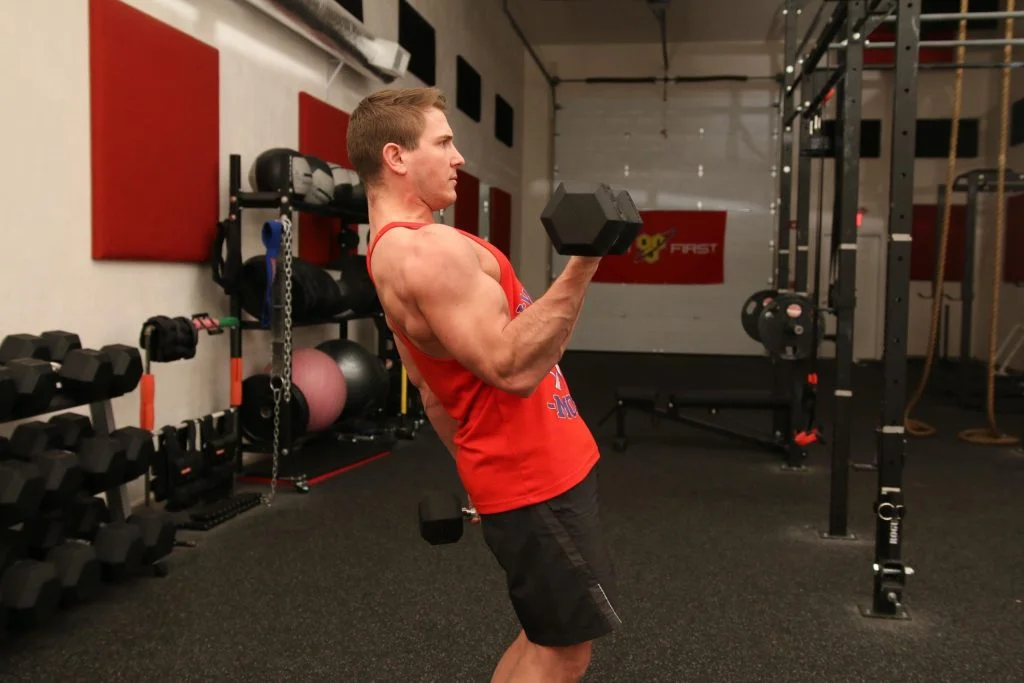
Why Swinging the Lower Back Is a Mistake
Swinging the lower back during bicep curls is a mistake because it uses body momentum to move the weight instead of asking the biceps to do the job. This may let you lift heavier dumbbells, but it often reduces useful arm tension and may increase stress on the spine and hips.
This mistake can be obvious or very subtle. Some lifters only notice it when the same weight suddenly feels much harder against a wall or when their lower back feels tight after curls instead of their arms feeling challenged.
How Can You Tell If You Are Cheating the Curl?
You are probably cheating the curl if your torso rocks backward, your elbows drift a lot, or your usual weight becomes much harder when you stand against a wall. Lower back tightness after the set is another clue. These signs usually mean momentum is helping the weight travel upward.
- Wall test: Stand with your back lightly against a wall and repeat the curl.
- Load check: If strict reps collapse quickly, the original weight may be too heavy.
- Body signal: Lower back discomfort after curls is usually not the goal.
How Do You Fix Lower-Back Swinging in Curls?
To fix lower-back swinging, lower the weight, stand tall, brace the trunk, and keep the ribcage stacked over the pelvis. Let the elbows stay relatively still instead of launching the weight with the hips. Better posture often puts more tension back into the biceps and less strain into the back.
If posture is a weak point, related RAW Active content like posture guidance and lower back pain support may help provide extra context.
Why Cutting the Range Short Is a Mistake
Cutting the range of motion short at the bottom of a bicep curl is a mistake because it removes work from the lengthened portion of the rep. That bottom range may be an important growth stimulus. Partial reps can have a place, but avoiding full elbow extension by default often limits the exercise.
Many people shorten the bottom range to keep “constant tension,” but that usually becomes an excuse to avoid the harder part of the movement. A fuller range often makes the rep more honest and the set more useful.
How Do You Use a Better Range of Motion in Bicep Curls?
Use a better range of motion by letting the elbow open fully at the bottom under control, then starting the next rep without bouncing. Slightly tightening the triceps at the bottom can help you find full extension. The aim is not to go loose, but to respect the full path of the lift.
- Lower fully: Do not cut the rep short because the stretch feels harder.
- Stay controlled: Reach the bottom without dropping the weight recklessly.
- Rebuild tension: Start the next rep from a clear, stable bottom position.
Why Curling the Wrist Is a Mistake
Curling the wrist during a bicep curl is a mistake because it shifts too much effort toward the forearm flexors and away from the biceps. That can make your forearms fatigue first and may irritate the wrist or elbow over time. A neutral wrist usually keeps the movement cleaner.
This error is common because it happens subconsciously, especially when the set gets hard. Some lifters flex the wrist forward, while others let it bend backward. Both usually make the exercise less efficient.
How Do You Keep a Neutral Wrist During Curls?
Keep a neutral wrist by thinking of the hand as a strong hook connecting the forearm to the dumbbell or bar. Grip the weight firmly, but do not actively curl the wrist. A stacked hand and forearm position often improves comfort, keeps tension where you want it, and helps the elbow track more smoothly.
If forearms dominate every curl set, reduce the load and reset your wrist position first. Technical cleanup often matters more than chasing another few kilograms with poor mechanics.
How to Do Bicep Curls Correctly
To do bicep curls correctly, stand upright, keep the torso quiet, let the elbow move through a full controlled range, and keep the wrist neutral. Choose a weight you can control without swinging. Good curls are not about showing the heaviest dumbbell. They are about delivering useful tension to the target muscle.
What Weight Should You Use for Bicep Curls?
You should use a weight that lets you keep posture, range, and wrist position consistent from the first rep to the last. If you need to throw the torso backward or shorten the bottom to survive the set, the load is probably too heavy. Honest loading usually builds better habits.
- Start lighter: Strict form often feels harder than sloppy lifting.
- Earn progression: Add weight only when technique stays stable.
- Match the goal: A bodybuilding curl does not need powerlifting ego.
What Reps and Tempo Work Well for Bicep Curls?
A controlled rep range such as moderate repetitions with a steady lifting and lowering tempo works well for most people. The exact number can vary by goal, but quality matters more than chasing speed. A slower lowering phase often helps you feel the biceps better and reduces careless swinging.
- Lift smoothly: Do not jerk the weight past the sticking point.
- Lower with control: The lowering phase is part of the exercise, not a break.
- Stop before collapse: End the set when form starts falling apart badly.
When Should You Stop and Seek Help?
You should stop bicep curls and seek help if you feel sharp pain, sudden weakness, unusual swelling, or symptoms that keep getting worse in the elbow, wrist, shoulder, or lower back. Normal muscle effort is one thing. Joint pain or nerve-like symptoms deserve a more careful assessment.
If technique keeps breaking down or pain persists, guided coaching through personal training or a review of broader training mistakes such as common workout errors may be useful.
Bicep Curl FAQ
This FAQ covers the most common questions about bicep curl technique, including strict form, partial reps, and discomfort during the movement. The big idea is simple: cleaner reps usually beat messier heavy ones when your goal is arm growth, safer loading, and more consistent training quality over time.
Should You Do Bicep Curls Against a Wall?
Doing bicep curls against a wall can be a useful drill because it reduces body swing and makes cheating easier to spot. It is not mandatory for every set, but it can help you learn stricter mechanics. If the wall version feels dramatically harder, your normal curls may be using too much momentum.
Are Partial Reps Bad for Bicep Growth?
Partial reps are not automatically bad, but using them all the time while avoiding the bottom range may limit the value of the exercise. A fuller range usually gives the biceps more work through the stretched position. Partials can be a tool, but they should not replace sound full-range reps by default.
Why Do My Forearms Burn More Than My Biceps?
Your forearms may burn more than your biceps if you keep flexing or extending the wrist during curls, grip the weight awkwardly, or use a load that is too heavy to control well. Resetting to a neutral wrist and lowering the load often helps shift the stress back where it belongs.
Can Bad Bicep Curl Form Cause Pain?
Bad bicep curl form can contribute to discomfort because repeated compensation may overload the lower back, wrist, elbow, or shoulder. That does not mean every ache comes from curls alone, but sloppy mechanics can add unnecessary stress. If pain is sharp, persistent, or worsening, get it checked properly.
Final takeaway: Stop chasing heavier curls that your biceps are not truly lifting. Clean up the basics, use a full range, keep the wrist neutral, and progress only when the quality stays high. Better curls usually come from better control, not more ego.