Every strength programme you have ever tried was built from two simple building blocks: moves that work both sides of the body at the same time, and moves that work one side at a time. Bilateral training builds raw strength and muscle mass. Unilateral training fixes asymmetries, sharpens core control, and lowers injury risk. The smartest programmes blend both, because each one covers a blind spot the other leaves behind. This guide walks through the differences, the strengths and weaknesses of each style, and a balanced six‑day weekly plan you can adapt to your own goals.

What Is Bilateral Training?
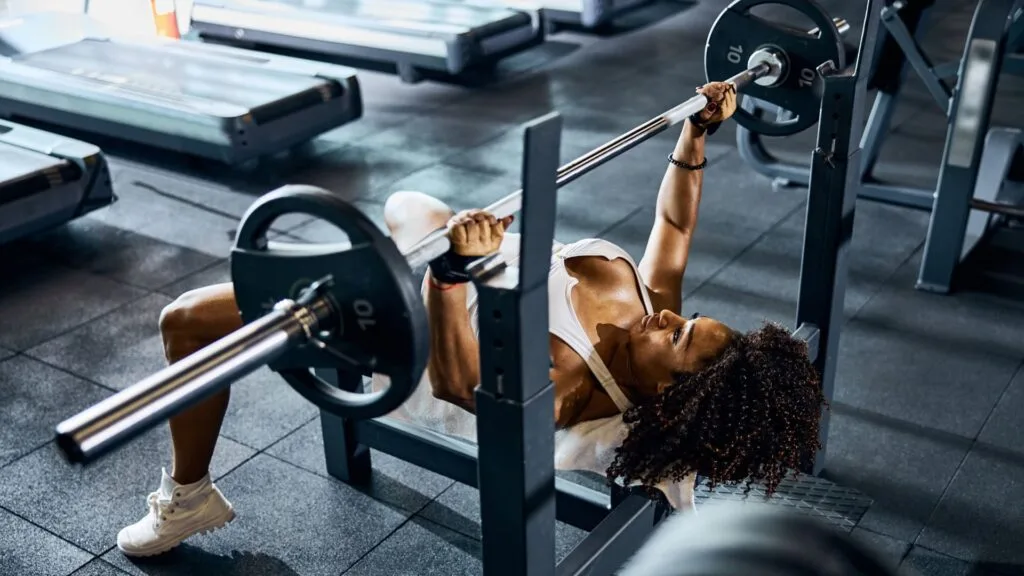
Bilateral training means training both limbs at the same time. The classic examples are the back squat, the deadlift, the bench press, the overhead press, the barbell row, and the pull‑up. Because both sides work together, you can load the movement heavily. Bilateral exercises are the most efficient way to move large weights, build total‑body strength, and drive hypertrophy across the chest, back, hips, and thighs.Bilateral work also activates the nervous system in a powerful way. Heavy squats and deadlifts recruit large muscle groups and high‑threshold motor units in a single coordinated effort. That is why bilateral strength tends to transfer quickly to athletic performance and to the gym numbers that lifters care about most. If you want details on programming, see the RAW Active
strength training guide.
Common Bilateral Exercises
- Upper body push: barbell bench press, overhead press.
- Upper body pull: barbell rows, pull‑ups, inverted rows.
- Lower body push: back squat, front squat, leg press.
- Lower body pull: conventional deadlift, Romanian deadlift, trap‑bar deadlift.
- Loaded carries: farmer carry, suitcase carry.
What Is Unilateral Training?
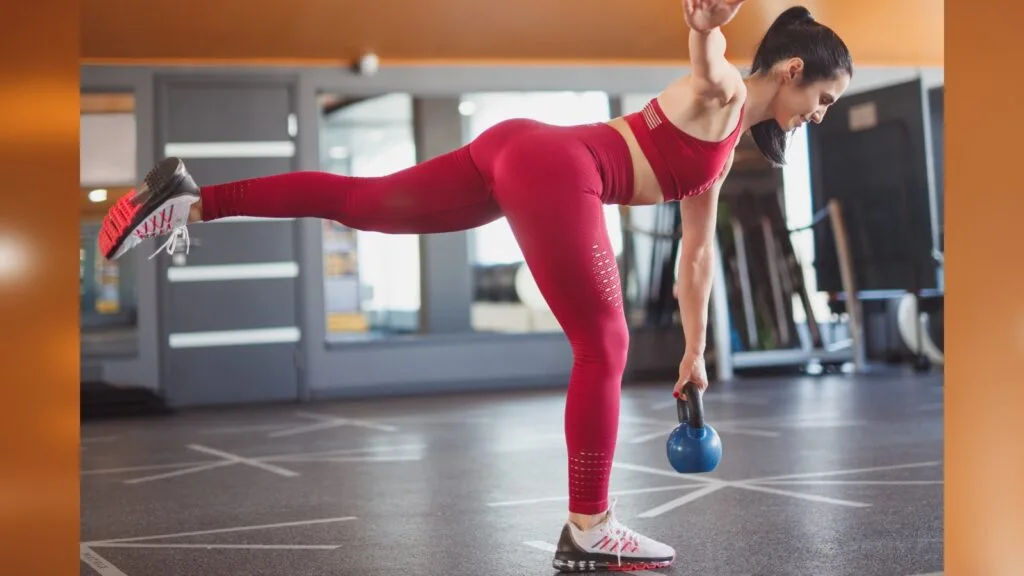
Unilateral training means training one limb at a time. The classic examples are the Bulgarian split squat, the single‑leg Romanian deadlift, the single‑arm dumbbell row, the single‑arm overhead press, and the step‑up. Because only one side works, the core, hips, and ankles must stabilise the entire body against rotation, tilt, and pace changes. That extra stabilisation work is the unique value of unilateral training.Unilateral work is also the best tool for correcting left‑right imbalances. If your right leg drives harder in a squat, your left arm pulls harder in a row, or one hip drops in a single‑leg stance, unilateral drills expose and fix the gap. They also build practical strength that transfers to running, sprinting, jumping, carrying groceries, and climbing stairs.
Common Unilateral Exercises
- Lower body: Bulgarian split squat, single‑leg Romanian deadlift, step‑up, reverse lunge, walking lunge.
- Upper body push: single‑arm dumbbell overhead press, single‑arm bench press.
- Upper body pull: single‑arm dumbbell row, single‑arm cable row.
- Core: single‑arm farmer carry, single‑leg glute bridge, single‑leg dead bug.
- Rotational: single‑arm dumbbell press with rotation, Pallof press, half‑kneeling cable chop.
For a deeper dive into one of the most popular unilateral drills, see the RAW Active
Bulgarian split squat guide.
Unilateral vs Bilateral Training: Side by Side
The two styles look similar on paper, but they train different qualities. Use this comparison to decide what each session needs.
- Primary goal: bilateral training builds absolute strength and muscle mass. Unilateral training builds balance, coordination, and joint stability.
- Load potential: bilateral lifts let you move the heaviest loads because both sides share the work. Unilateral lifts use lighter loads but challenge stabilisers harder.
- Core demand: bilateral lifts keep the core braced in a fixed posture. Unilateral lifts demand continuous anti‑rotation, anti‑tilt, and anti‑extension control from the core.
- Imbalance correction: bilateral lifts can hide asymmetries because the strong side compensates. Unilateral lifts expose asymmetries and force each side to work on its own.
- Range of motion: bilateral lifts often run shorter ranges for safety under heavy load. Unilateral drills like the Bulgarian split squat and split stance RDL allow fuller ranges that improve hip and ankle mobility.
- Injury prevention: bilateral training protects joints under heavy loads through bracing. Unilateral training protects joints through stability, balanced loading, and motor control.
- Skill transfer: bilateral training transfers well to strength sports, powerlifting, and heavy lifting goals. Unilateral training transfers well to running, jumping, sport, and everyday balance.
Why Lifters Still Need Both
Programme research has consistently shown that mixing bilateral and unilateral work produces better strength, balance, and injury outcomes than either style alone. The bilateral lifts give you the strength numbers. The unilateral lifts give you the control to use that strength safely. Cut one out and the other half underperforms over time.
Functional Training: The Missing Link
Functional training is the bridge between the two styles. It uses multi‑plane movements that blend strength, balance, and rotation in one rep. A pure bilateral or unilateral programme can plateau when the body lacks the coordination to use its strength in real life. Functional drills fix that gap.
- Bilateral functional moves: kettlebell swings, medicine ball slams, sandbag cleans.
- Unilateral functional moves: step‑ups with knee drive, single‑leg balance with row, single‑arm rotational press.
- Loaded carries: farmer, suitcase, overhead, and yoke walks. They are technically bilateral but recruit the core more than most lifts.
Functional strength also matters for runners. If you log regular kilometres, single‑leg drills reduce the risk of common overuse issues. Read the RAW Active
five powerful tips to prevent running injuries for practical runners’ strength work. For endurance athletes who also want raw strength, the
HYROX training Singapore explainer outlines how to programme both styles for race performance.
Who Each Style Is Best For
- Beginners: start with bilateral lifts to learn the patterns under safe load. Add unilateral drills once technique is steady.
- Strength and power athletes: lean heavily on bilateral lifts to push numbers, with unilateral accessories to balance left and right and protect joints.
- Endurance athletes: lean on unilateral drills because every run and ride is single‑leg work. Use bilateral lifts to maintain total‑body strength.
- Adults over 40: benefit from more unilateral work to protect joints, prevent falls, and slow the loss of balance. Pair with bilateral lifts to preserve muscle mass. See fitness over 50 for the long‑term view.
- Returning after injury: prioritise unilateral drills for joint‑safe loading and imbalance correction. Add bilateral lifts as range and strength return. The best personal trainers for injury rehabilitation explainer outlines the right supervision.
- Women lifters: use both styles. Unilateral work supports hip stability and pelvic floor control. Bilateral work supports bone density and lean mass. See strength training for women.
A Balanced Weekly Program
The six‑day template below blends bilateral and unilateral work across the week, with two rest or active‑recovery days. Adjust load, reps, and exercise selection to match your equipment, goals, and recovery capacity.
Day 1: Lower Body Strength (Bilateral Focus)
- Barbell back squat: 4 sets of 6 reps.
- Romanian deadlift: 3 sets of 8 reps.
- Bulgarian split squat: 3 sets of 10 reps per leg.
- Single‑leg glute bridge: 2 sets of 12 reps per leg.
- Hanging knee raise or dead bug: 3 sets of 10 reps.
Day 2: Upper Body Strength (Bilateral Focus)
- Barbell bench press: 4 sets of 6 reps.
- Barbell bent‑over row: 4 sets of 8 reps.
- Overhead press: 3 sets of 8 reps.
- Pull‑ups or assisted pull‑ups: 3 sets of 6 to 8 reps.
- Side plank: 2 sets of 30 seconds per side.
Day 3: Unilateral Strength and Core
- Single‑leg Romanian deadlift: 3 sets of 8 reps per leg.
- Single‑arm dumbbell row: 3 sets of 10 reps per arm.
- Walking lunge: 3 sets of 12 steps per leg.
- Pallof press: 3 sets of 10 reps per side.
- Farmer carry: 3 sets of 30 metres.
Day 4: Active Recovery or Rest
- Light walk: 30 to 45 minutes.
- Optional mobility flow: hips, thoracic spine, ankles, shoulders.
- Optional breath work or sauna.
For recovery principles that apply across the week, see the RAW Active
recovery pyramid and the
art of rest for training.
Day 5: Lower Body Power (Mixed Bilateral and Unilateral)
- Trap‑bar deadlift or kettlebell swing: 4 sets of 5 reps.
- Step‑up to weighted knee drive: 3 sets of 8 reps per leg.
- Reverse lunge with reach: 3 sets of 10 reps per leg.
- Single‑arm overhead press: 3 sets of 8 reps per arm.
- Loaded carry variation: 3 sets of 30 metres.
Day 6: Upper Body Hypertrophy (Mixed)
- Incline dumbbell press: 3 sets of 10 to 12 reps.
- Single‑arm cable row: 3 sets of 12 reps per arm.
- Landmine press: 3 sets of 10 reps per side.
- Incline pull‑ups: 3 sets of 8 to 10 reps. Reference the incline pull‑ups guide for technique.
- Core circuit: dead bug, side plank, bird dog, 2 rounds of 30 seconds each.
Day 7: Full Rest
- No structured training. Light movement only.
- Focus on sleep, hydration, and nutrition recovery.
Common Mistakes When Mixing Bilateral and Unilateral Work
- Skipping unilateral work because bilateral lifts feel more impressive. Unilateral work is where most imbalance and injury fixes happen.
- Loading unilateral drills like bilateral drills. Unilateral moves recruit fewer muscles per rep. Use lighter loads.
- Letting the strong side drive the weak side. Pause briefly between sides and match reps exactly. Mirror strength develops faster.
- Doing too much volume. Six days of training is for advanced lifters. Beginners should start with three days and add days as recovery allows.
- Ignoring mobility. Unilateral drills benefit from freed‑up hips and ankles. Do not skip the mobility basics. See stretching myths exposed for the right approach.
How to Progress Within the Programme
- Weeks 1 to 2: lock in technique, choose loads that allow clean reps across all sets.
- Weeks 3 to 4: add one rep per set on bilateral lifts. Add 2 to 3 kg on unilateral lifts when all reps are clean.
- Weeks 5 to 6: introduce tempo work (3 seconds down, 1 second pause, 2 seconds up) on unilateral drills.
- Weeks 7 to 8: swap one bilateral accessory for a unilateral variation to recruit a new pattern.
- Weeks 9 to 12: retest one‑rep maxes on the squat, deadlift, and bench press. Expect measurable gains.
For lifters who want the long‑term case for muscle and strength, see
the importance of building muscle and strength to stay pain‑free. For aesthetics and body‑composition targets, see
achieve your sculpt body. For powerlifting‑specific programming, read the
powerlifting explainer.
Why Both Styles Matter for Long‑Term Health
Bilateral lifts preserve muscle mass, bone density, and metabolic health as the calendar advances. Unilateral lifts preserve balance, joint integrity, and coordination, the three qualities that protect older adults against falls. Together, they build the kind of strength that lets you pick up children, carry groceries, climb stairs, play sport, and stay independent for decades. The longevity case is laid out in
anti‑aging and the broader philosophy behind adult learning sits at
adult learning methods.
Final Takeaway
Bilateral training builds the heavy, foundational strength your body needs to move well under load. Unilateral training builds the balancing, stabilising, joint‑protecting control that keeps you moving safely across decades. Combine the two and you get strength that is both powerful and durable. Drop one and you leave a gap that eventually shows up as a plateau, a niggle, or an injury. Use the six‑day programme above as a starting template, scale it to your recovery and equipment, and retest every eight to twelve weeks. For a completely personalised version built around your body and goals, book a free consult at RAW Active Personal Training via the
personal training page.
Frequently Asked Questions
What is the main difference between bilateral and unilateral training?
Bilateral training works both sides of the body at the same time, so it builds absolute strength and muscle mass. Unilateral training works one side at a time, which demands greater core control, corrects left‑right imbalances, and improves balance.
Is unilateral training enough on its own?
Unilateral training is powerful but limited on its own. Heavy bilateral loads build total‑body strength and bone density more efficiently. The strongest programmes blend both.
Should beginners do unilateral or bilateral lifts first?
Begin with bilateral lifts to learn the patterns under safe, stable conditions. Add unilateral drills once technique is steady, usually around the four to six week mark.
How often should I train unilateral?
For most lifters, two to three unilateral sessions a week is enough. Each session can include two to three unilateral drills alongside bilateral work.
Do unilateral exercises build as much muscle as bilateral exercises?
Unilateral exercises can build comparable muscle when programmed with similar volume and effort, but bilateral lifts allow heavier absolute loads and slightly higher total muscle activation per rep.
Are unilateral exercises better for injury prevention?
Unilateral exercises are an excellent tool for injury prevention because they expose and correct asymmetries, train stabiliser muscles, and improve joint control. They work best when paired with solid bilateral strength.
Which unilateral exercise is most important?
The Bulgarian split squat is one of the most efficient unilateral drills because it loads the quads, glutes, and core in a lengthened position. For a full breakdown, see the
Bulgarian split squat guide.
Can I do this programme without a barbell?
Yes. Substitute dumbbells, kettlebells, or machines for the barbell work. The unilateral drills already listed can be done with dumbbells, and most bilateral patterns have a dumbbell alternative. For a beginner‑friendly template, see
relieve lower back pain fast, which leans heavily on unilateral control.
How do I know if I have a left‑right imbalance?
Test it on a single‑leg variation. If one leg glute‑bridges, squats, or jumps noticeably lower or less comfortably than the other, an imbalance is present. Unilateral training fixes it within eight to twelve weeks when programmed consistently.
How long does this programme take to show results?
Strength and balance gains show up within four to six weeks. Visible muscle and body‑composition changes follow at eight to twelve weeks. For the long view on progress, see
the strength training guide and the
recovery pyramid for what to do on rest days.