
Advanced Glycation End Products (AGEs) are damaged proteins and lipids that form when sugars react with body tissues in a slow, silent chemical process. The reaction stiffens collagen, injures nerve fibres, ages skin, fuels chronic inflammation, and accelerates the cellular decline behind most age-related diseases. AGEs are now widely recognised as a major player in type 2 diabetes, obesity, metabolic syndrome, cardiovascular disease, neurodegeneration, and the visible signs of aging. Although you cannot see AGEs directly, their fingerprints show up in skin yellowing, post-rest joint stiffness, slower wound healing, and creeping blood-sugar imbalances. This guide explains what AGEs are, how they form, where they come from, the damage they cause, and the practical habits that lower them, so you can protect your long-term health.
What Are Advanced Glycation End Products (AGEs)?
AGEs are the final, stable products of a chemical chain in which sugars attach to proteins, lipids, or nucleic acids and progressively harden into a form the body cannot easily reverse. They accumulate in long-lived tissues like skin collagen, eye lens proteins, cartilage, and nerve sheaths. The more sugar in circulation, the more oxidative stress the body carries, and the longer the lifespan of the affected tissue, the more AGEs build up over time.
AGEs are not simply a curiosity of biochemistry. They drive the inflammation, stiffness, and dysfunction that show up as wrinkles, joint pain, neuropathy, kidney disease, brain fog, and accelerated cardiovascular aging. The good news is that they are also one of the few aging mechanisms where daily lifestyle choices have a measurable impact.
How AGEs Form: The Chemistry, Made Simple
The formation of AGEs is a three-step process that takes place at body temperature.
- Step 1: Schiff base formation. A sugar molecule attaches to a protein or lipid. This initial bond is loose and reversible.
- Step 2: Amadori rearrangement. Within days, the bond reorganises into a more stable mid-stage product called an Amadori product. This stage is still partially reversible but harder to clear.
- Step 3: Final AGE formation. Over weeks and months, the mid-stage product hardens into a final AGE, cross-linked into tissue and resistant to the body’s normal repair pathways.
This entire sequence is a version of the Maillard reaction, the same chemistry that browns bread crust and sears a steak. Inside the body, the browning happens slowly, at body temperature, with sugars as the fuel and long-lived proteins as the surface that gets damaged.
Endogenous vs Exogenous AGEs
AGEs enter the body through two main routes.
Endogenous AGEs (Made Inside Your Body)
Endogenous AGEs form when blood sugar stays elevated, when oxidative stress is high, when sleep is poor, when smoking adds reactive chemicals, and when normal aging allows sugars more time to bond with long-lived proteins. Skin collagen, eye lens crystallins, cartilage, and nerve sheaths are prime targets because they last for years and have plenty of time to be glycated. Once an AGE has formed in these tissues, it stays there until the protein is broken down and replaced.
Exogenous AGEs (Coming From Outside)
Exogenous AGEs come from food and from inhaled smoke. Charred meat, deep-fried snacks, processed cheese, sugary baked goods, and anything cooked at very high dry heat carries high AGE loads. Cigarette smoke delivers AGEs directly into lung tissue. Air pollution from heavy traffic adds a smaller but steady dose. Modern Western and Singaporean diets that lean heavily on hawker stir-fries, satay, and BBQ-flavoured snacks can stack up exogenous AGEs quickly when cooking temperatures run high and moisture is low.
How AGEs Trigger Damage: The RAGE Receptor
The Receptor for Advanced Glycation End Products, RAGE, sits on the surface of many cell types. When AGEs dock onto RAGE, the cell receives a signal that turns on inflammation, generates more reactive oxygen species, and disrupts insulin signalling at the cell membrane. Sustained RAGE activation is one of the main reasons high circulating AGE levels correlate with type 2 diabetes and cardiovascular complications in clinical studies.
RAGE activation also blocks the ubiquitin-proteasome system, the cell’s normal machinery for clearing damaged proteins. Once that system slows, misfolded and glycated proteins pile up, and the cell becomes more vulnerable to additional stress. The cumulative effect shows up in skin, brain, blood vessels, kidneys, and nerves.
AGEs and Skin Aging
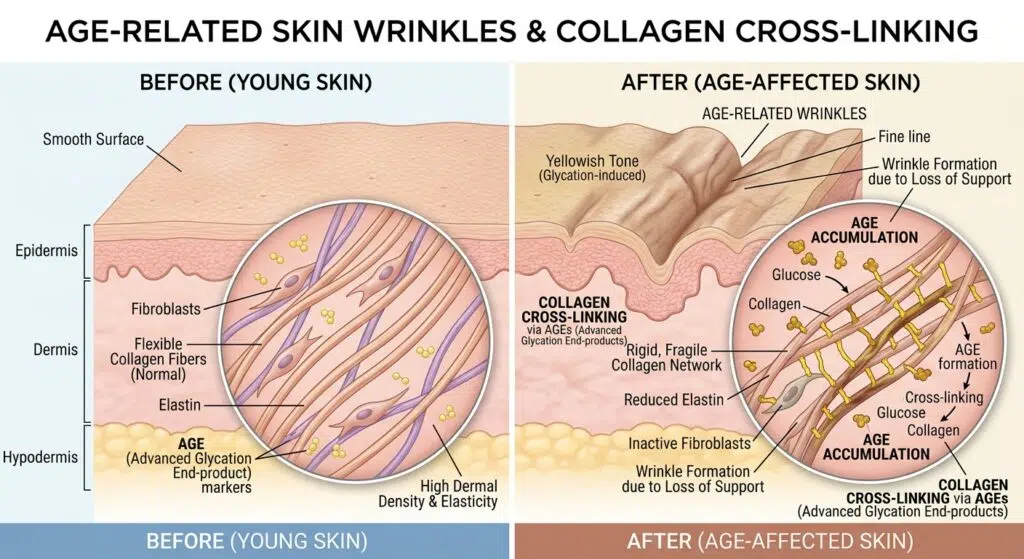
Skin collagen has a half-life measured in years. Glycation cross-links collagen and elastin fibres into stiff, brittle networks. The visible result is sallow skin tone, deeper fine lines, slower recovery from sun damage, and earlier loss of elasticity. Sugar in the diet, combined with high-heat cooking and high cortisol from poor sleep, accelerates this process measurably in the skin of the face, neck, and hands.
Lowering dietary AGEs, managing blood sugar, and supporting collagen turnover through strength training, sleep, and micronutrients all slow the visible skin aging caused by glycation. The deeper longevity link between strength training and skin resilience is captured in the RAW Active exercise and reverse aging explainer.
AGEs and Brain Aging
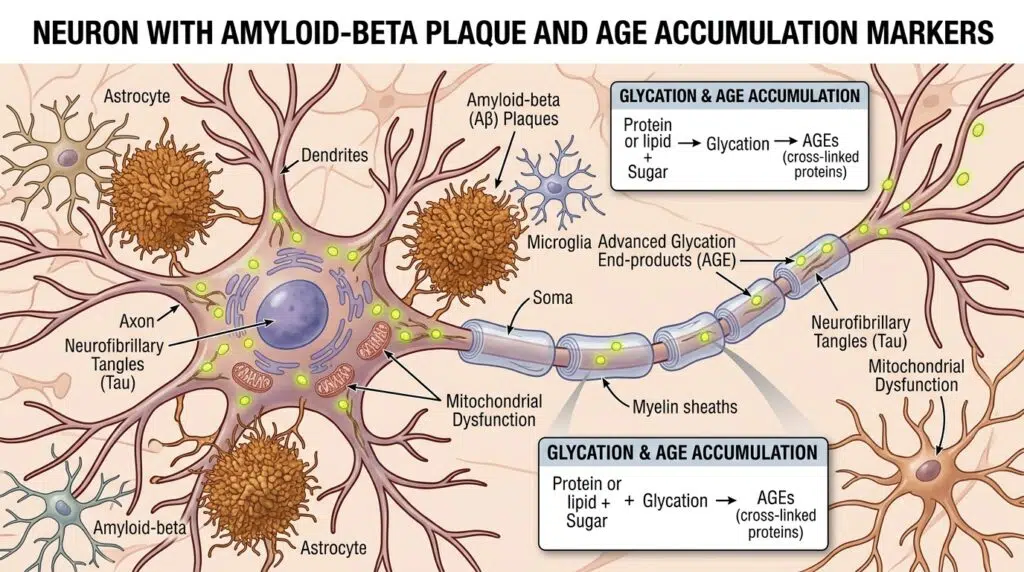
Brain tissue is rich in long-lived proteins and lipids, and it is protected by the blood-brain barrier, which also slows AGE clearance. AGEs accumulate in the brain and are tightly tied to neurodegeneration, mitochondrial dysfunction, and the plaques seen in Alzheimer’s and Parkinson’s disease. They cross-link amyloid proteins, making plaques stickier and harder to clear, and they feed chronic neuroinflammation that drives symptoms forward.
AGEs and Diabetes-Associated Complications
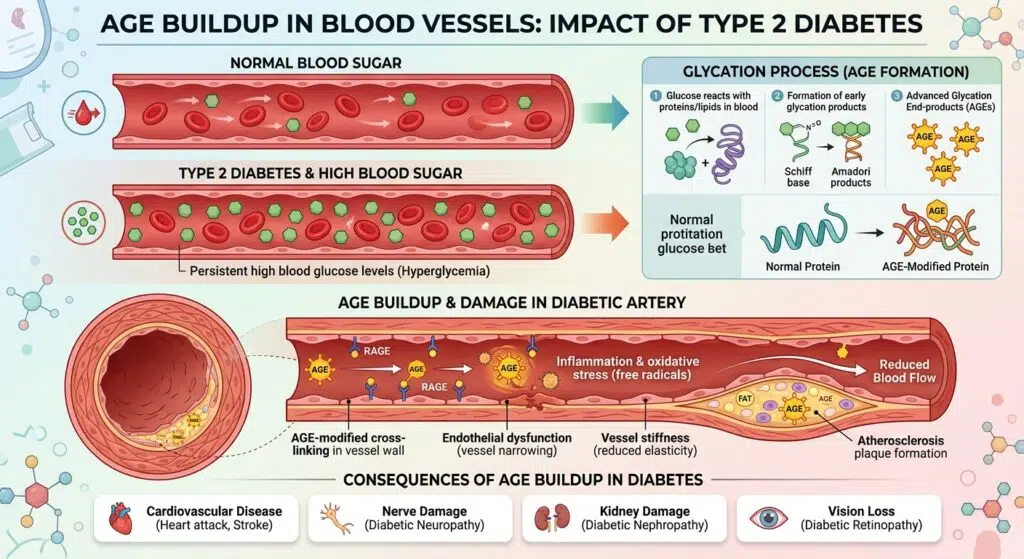
Diabetes raises blood sugar, which raises endogenous AGE formation, which raises RAGE signalling, which raises inflammation, which makes blood sugar harder to control. The loop is self-reinforcing. Breaking it requires managing blood-sugar variability, lowering dietary AGE intake, and adding recovery habits that reduce oxidative stress.
- Peripheral neuropathy: nerve sheaths are made of long-lived proteins. AGEs damage small fibres that carry pain and temperature signals first, producing burning, tingling, and numbness in the feet and hands.
- Diabetic nephropathy: the kidney filters blood around the clock. AGE-laden proteins clog and thicken the glomerular basement membrane, reducing filtration efficiency and allowing protein to leak into urine.
- Diabetic macroangiopathy: AGEs damage the inner lining of large arteries, stiffen vessel walls, and accelerate plaque formation. Heart attack, stroke, and peripheral artery disease risk all rise with cumulative AGE load.
- Obesity: visceral fat produces its own inflammatory load and slows AGE clearance. Obesity plus high dietary AGE intake is a worse combination than either alone, especially for adults managing waistlines and blood markers at the same time.
AGEs and Neurodegenerative Disease
AGEs and Parkinson’s Disease
Parkinson’s disease involves the loss of dopamine-producing neurons in the substantia nigra. AGE accumulation in those neurons, combined with mitochondrial damage and chronic oxidative stress, accelerates disease progression. Lowering dietary AGEs is one piece of a long-term protective strategy, alongside strength training, aerobic exercise, and good sleep.
AGEs and Alzheimer’s Disease
Alzheimer’s disease involves amyloid plaques and tau tangles. AGEs cross-link amyloid proteins, making plaques stickier and harder to clear. They also feed the chronic neuroinflammation that drives symptoms forward. Combined with insulin resistance in the brain, AGE-driven inflammation forms part of the biochemical picture behind cognitive decline.
Seven Practical Ways to Lower AGEs
- Cook at lower temperatures. Steam, poach, stew, and slow-roast cut AGE formation sharply compared to grilling, deep-frying, and pan-searing at high heat. Lower temperature plus moisture equals lower AGE output.
- Marinate meat before cooking. Lemon juice, vinegar, and herbs cut AGE formation during cooking by up to half. Acidic marinades slow the Maillard reaction at the surface of the meat.
- Use water-rich cooking methods. Boiling, poaching, steaming, and braising keep surface temperatures below the AGE threshold. Stews, soups, and claypot dishes are AGE’s worst enemy.
- Choose lower-AGE proteins when possible. Fish, tofu, legumes, eggs, and poultry cooked moist produce fewer AGEs than charred red meat. Variety matters more than perfection.
- Manage blood sugar. Lower glucose variability means fewer endogenous AGEs form. Protein with each meal, fibre on the plate, and walking after meals all help. See how mooncakes and other sweet treats stack up for a Singapore-specific perspective.
- Quit smoking and limit polluted air exposure. Cigarette smoke and exhaust fumes deliver AGEs straight to the lungs and bloodstream. Reducing exposure is a measurable win for skin, brain, and circulation.
- Move consistently. Regular aerobic and strength work improves insulin sensitivity, lowers oxidative stress, and supports the body’s clearance systems. Two to four weekly sessions plus daily walking is a realistic minimum. For the broader framework, see the RAW Active strength training guide and the strength training fundamentals.
HbA1c: A Useful Marker for Glycation Load
HbA1c measures the percentage of haemoglobin that has bonded with glucose over the past two to three months. Because haemoglobin lives around 120 days, HbA1c gives a long-window view of average blood sugar, which is also a proxy for endogenous AGE formation. Adults with HbA1c above the optimal range tend to show higher circulating AGE levels, faster skin aging, and higher risk of diabetes complications. Keeping HbA1c in the lower healthy range through diet, movement, sleep, and weight management is one of the most direct ways to slow AGE-driven damage.
Singapore-Specific Levers to Lower AGEs
Singaporeans love their hawker fare, and most of it can fit an AGE-conscious lifestyle with smart tweaks. Choose steamed, soups, or boiled dishes over deep-fried and BBQ where possible. Pair sweet drinks with a meal and walk afterwards rather than drinking them alone. Choose fish and tofu over bacon, char siu, and sausage. Pick fresh fruit over baked sugary treats for everyday snacking, and treat high-AGE foods as occasional choices. For readers navigating celebrations, the RAW Active cheat days explainer shows how to enjoy food without derailing long-term health.
How Lowering AGEs Connects to Daily Habits
The seven levers above are not a one-week fix. They are a behavioural stack that compounds across months and years. Cooking with moisture and acid, walking after meals, sleeping 7 to 9 hours, quitting smoking, and training 2 to 4 times a week together produce a measurable drop in circulating AGEs in clinical studies. Combine those habits with a stable blood sugar and you have a realistic plan to slow skin aging, protect brain function, and lower risk of diabetes and cardiovascular complications.
Where Strength Training Fits
Strength training is one of the best defences against AGE-driven decline. It improves insulin sensitivity, builds lean mass that keeps blood sugar stable, and supports bone density, joint health, and metabolic flexibility. Two to three strength sessions per week is the right dose for most working adults. For the broader case for strength training across the lifespan, the RAW Active anti-aging guide and exercise and reverse aging page lay out the evidence and the practical application.
Sleep, Stress, and the AGE Connection
Poor sleep raises cortisol, raises fasting blood sugar, and slows the clearance of damaged proteins. Chronic stress does the same. Adding to that, sleep deprivation makes late-night high-AGE snacking more likely. The fix is structural. Set a fixed sleep and wake time within a 30-minute window, wind down 30 minutes before bed, keep the room cool and dark, and avoid screens in the last hour. The stretching myths exposed page contains useful complementary recovery guidance, and the cellular case for sleep sits inside the cellular youthfulness, telomeres, and lifestyle changes explainer.
How AGEs Interact With Age and Recovery
AGE clearance slows with age because the ubiquitin-proteasome system loses efficiency and kidney filtration often drops. Even a steady dietary and endogenous AGE input therefore produces higher tissue AGE levels as the years pass. Reversing the trend requires both lowering input and improving output. Strength training, aerobic conditioning, sleep, hydration, and micronutrient support each lift output by easing oxidative stress, supporting kidney filtration, and improving cellular housekeeping.
Who Should Pay Particular Attention to AGEs?
- Adults over 40, especially those wanting to preserve skin, joint, and brain health.
- Anyone with type 2 diabetes, prediabetes, or a family history of diabetes.
- People with chronic kidney disease or a family history of kidney issues.
- Adults with high blood pressure or elevated cardiovascular risk.
- Anyone carrying significant visceral fat, which slows AGE clearance.
- Smokers and ex-smokers working on recovery.
- Seniors aiming to preserve mobility and cognition, where the activities for elderly and enhancing senior fitness resources give practical guidance.
Putting It All Together
You cannot entirely stop AGE formation, but you can shift the balance in your favour. Lower the dietary input from charred and fried food, manage blood sugar, sleep well, stay active, and quit smoking if applicable. Each change removes a slice of AGE pressure on skin, brain, vessels, and kidneys. Across a decade, that slice becomes a substantial gap in how fast you age. For a wider look at how exercise and lifestyle changes support cellular aging, the RAW Active exercise and reverse aging page and the cellular youthfulness, telomeres, and lifestyle changes deep dive go further.
RAW Active’s personal training programmes integrate strength, conditioning, recovery, and nutrition coaching in one plan, supported by body composition scanning with the InBody 120 to track visceral fat and lean mass over time. If you want a clinical snapshot in Singapore, book your scan and free consultation here. For the broader RAW Active philosophy and how coaches keep clients accountable over the long term, see the client retention guide for Singapore and the retention page.
Frequently Asked Questions
What are advanced glycation end products in simple terms?
AGEs are damaged proteins and lipids that form when sugars react with body tissues. The reaction stiffens tissues, drives inflammation, and accelerates both visible and invisible aging. They are the chemical reason high-sugar diets and high-heat cooking age the body faster.
How do AGEs form in the body?
Sugars attach to proteins or lipids in three steps: Schiff base, Amadori rearrangement, and final AGE. The whole chain is the Maillard reaction happening slowly at body temperature.
Are AGEs only from food?
No. AGEs form inside the body (endogenous) and arrive from food and smoke (exogenous). The biggest controllable input is high-heat cooked food. Blood sugar, oxidative stress, aging, and smoking control the endogenous side.
Which foods are highest in AGEs?
Charred meat, deep-fried snacks, processed cheese, and sugary baked goods carry the highest AGE loads. Cooking method matters as much as food choice. A boiled or steamed serving of the same ingredient carries a fraction of the AGE load.
Which cooking methods lower AGE formation?
Steaming, poaching, boiling, stewing, and braising keep surface temperatures low. Marinating meat with lemon, vinegar, or herbs cuts AGE formation during cooking by up to half. Moist, lower-temperature, slightly acidic cooking is the winning formula.
Do AGEs affect the brain?
Yes. AGEs cross-link amyloid proteins in Alzheimer’s disease and damage dopamine neurons in Parkinson’s disease. They also feed chronic neuroinflammation across both conditions.
Are AGEs linked to diabetes complications?
Yes. AGEs contribute to peripheral neuropathy, diabetic nephropathy, and diabetic macroangiopathy through RAGE signalling, oxidative stress, and collagen cross-linking.
Can I measure my AGE levels?
Direct AGE blood panels exist in some research and clinical labs, though they are not routine. Skin autofluorescence readers and AGE-specific ELISA tests can give a snapshot. HbA1c, an everyday clinical test, also proxies AGE load because it measures long-term glucose exposure. Work with a clinician for personal testing.
How quickly do AGEs build up?
Build-up depends on input, endogenous formation, and clearance. High blood sugar, poor sleep, smoking, and chronic high-heat cooking accelerate it. Clearance slows naturally with age, which is why the visible effects ramp up in the late 40s and beyond.
Does exercise help lower AGEs?
Yes. Regular aerobic and strength work improves insulin sensitivity, reduces oxidative stress, and supports the body’s natural clearance of damaged proteins. Two to four weekly sessions plus daily walking is a realistic minimum. For the full framework, see the RAW Active strength training guide.
Is sugar the main driver of AGEs?
Sugar is a major driver, but AGE formation also depends on temperature, time, and surface area. A piece of fresh fruit has low dry-heat exposure, so it contributes less than fried sugary dough. Sweet treats like mooncakes are occasion foods precisely because their combination of sugar and baked dry-heat atmosphere is highly AGE-generating.
Do Singapore-specific foods matter?
Yes. Mooncakes, deep-fried carrot cake, charred satay, and sugary kueh sit on the higher-AGE end. Choice, frequency, and cooking method are the levers. Moderation beats elimination, especially across cultural festivities.
Is there a link between AGEs and immunity?
Chronic AGE accumulation fuels low-grade inflammation that suppresses effective immune function over time. Lowering AGEs supports the immune system indirectly through the same anti-inflammatory habits that support five tips to keep your immune system strong.
How is RAW Active connected to AGE reduction?
RAW Active Personal Training builds personalised strength and recovery programmes, runs InBody 120 scans to track visceral fat and lean mass, and supports lower-inflammation living across the week. Visit the personal training page or book a free consultation to get started.