
Most fat-loss plans fail for the same reason: they treat fat loss like a sprint. A hard, short window of restriction gives the scale a quick drop, then the body fights back through hunger, fatigue, and weight regain. Lose fat the right way is a slower, steadier project built on habits you can hold for years.
This guide breaks down the four habits that work consistently for clients across Singapore: a protein-rich breakfast, real hydration, steady sleep, and daily walking. Each one is small. Each one is repeatable. Stacked together, they shift body composition without the crash that ends most diets.
If you have struggled before, start with the reads on why you cannot lose weight and the deeper take on fat loss versus weight loss. Both explain why the muscle you keep matters as much as the fat you drop.
Why Quick Fixes Usually Fail at Fat Loss
The phrase “lose fat fast” sells a lot of plans. Most of them work for a short window, then your weight bounces back. The reason is simple: any plan that cuts one thing in half, whether calories, carbs, or sleep, creates a deficit your body cannot comfortably sustain. You lose some fat and a lot of water, then energy crashes, hunger spikes, and you stop.
Sustainable fat loss is slower but steadier. If you can lose about 0.5 to 1 percent of your body weight per week, you are losing mostly fat and keeping almost all of your muscle. That pace is gentle enough to live with: no missed workdays, no skipped social meals, no mood crashes. It is also the pace at which the lost weight stays off.
Two ideas worth holding alongside this: even on a good plan, the path to fat loss is paved by habits, not willpower, and the body holds on to fat when it sees the plan as a threat. Treat the plan as background, not an emergency, and the body lets go.
The Four Habits That Move the Scale
The four habits below are the ones we see clients improve most reliably:
- Protein at breakfast. Steady morning blood sugar; protect muscle while in a deficit.
- Real hydration. Plain water across the day, not calorie-laden drinks.
- Sleep. Seven to eight hours most nights, on a fixed schedule.
- Daily walking. 30 minutes brisk, five to seven days a week, on top of training.
Run the four together and most adults see the first change on the scale within four weeks. Run them inconsistently and the results drag. Treat each habit as non-negotiable for eight weeks, then audit what can flex.
Habit #1: Pile on the Protein at Breakfast
Breakfast sets the hormonal tone for the day. A protein-rich breakfast lowers your morning hunger hormone (ghrelin), steadies your blood sugar, and keeps you full through to lunch. The same protein load protects your muscle while you are in a calorie deficit, which is the difference between losing fat and just losing weight.
Most adults do fine with 20 to 30 g of protein at breakfast. Practical plates that work:
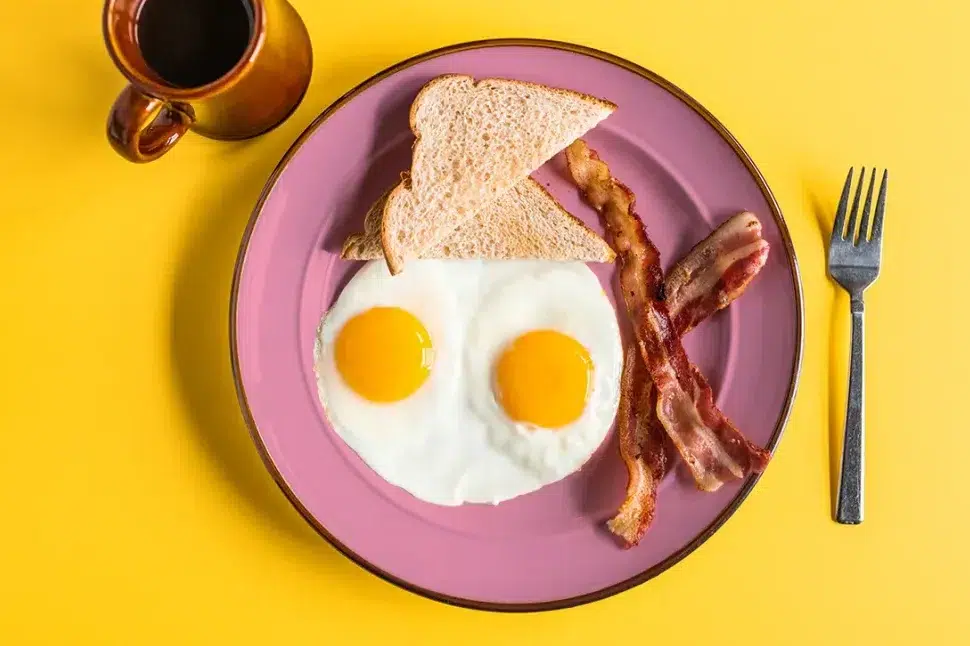
- Three eggs plus two slices of wholegrain toast, about 25 g of protein in 10 minutes.
- Greek yogurt with almonds and chia seeds, about 20 g of protein, easy to take to work.
- Cottage cheese with berries, a no-cook option for rushed mornings.
- Protein smoothie with oats, banana, and a scoop of whey, good for post-training mornings.
Avoid the breakfast traps that undo the habit: sugary cereals, flavoured pastries, and fruit juice. They spike blood sugar, raise insulin, and bring mid-morning hunger back faster than the meal was worth.
Why protein protects muscle on a cut
When you cut calories, the body can burn either fat or muscle for fuel. Protein signals the body to keep the muscle and burn the fat. Aim for the upper end of the daily band (about 1.6 to 2.0 g per kg of body weight) on training days. Read the strength training guide for how protein pairs with a real lifting program.

Habit #2: Stay Hydrated With Plenty of Water
Water is the simplest fat-loss aid and the most forgotten. A glass of water in the morning raises the number of calories your body burns for up to an hour. More importantly, your brain often confuses thirst with hunger, so even mild dehydration makes you eat when all you needed was a drink.
How much you actually need depends on size, training, and weather, but a working baseline is:
- Two to three glasses on waking, about 500 to 700 ml.
- One glass with each meal.
- Sip during training, about 150 to 250 ml every 15 to 20 minutes.
- One more glass on top if you wake up thirsty or your urine is dark yellow.
Sweet drinks, fruit juice, and flavoured coffee do not count toward this baseline. Plain water, sparkling water, or unsweetened tea are the swaps that actually move the needle. For a deeper take, see our full hydration strategies.
A note for hot and humid Singapore days
Outdoor training, long commutes, and air-conditioned offices all push water loss up. Add an extra 500 ml on training days and on hot afternoons. Add a pinch of salt or an electrolyte tablet for sessions over 60 minutes.
Habit #3: Get Your Sleep Right
Sleep is the lever most people pull wrongest. They cut sleep to make room for training, then wonder why their appetite is uncontrollable and their progress stalls. Logic says more activity equals more fat loss. Physiology says the opposite: cut sleep below seven hours and the body holds on to fat, raises cortisol, and pushes you toward sugary, calorie-dense food.
The bare minimum that protects fat loss:
- 7 to 8 hours a night, most nights, in line with the art of rest for training.
- A fixed bedtime and wake time. The body regulates hormones on schedule, not on weekends.
- A wind-down routine. Dim lights, no screens in the last 30 minutes, a brief stretch or breath session.
- A cool, dark bedroom. Aim for 18 to 20 degrees Celsius with blackout curtains.
How broken sleep shows up on the scale
- Grehlin (hunger hormone) rises, so portion control slips.
- Leptin (fullness hormone) drops, so you feel hungry again at lunch.
- Insulin sensitivity worsens, especially around late meals.
- Cortisol stays elevated, pushing the body towards visceral fat storage.
If sleep is broken, fix it before you add more training. Recovery is what makes the next session possible in the first place.
Habit #4: Put on Your Walking Shoes
Walking is the most underrated fat-loss tool in the world. You will not torch calories in a single session, but you will increase your daily non-exercise activity thermogenesis (NEAT). Over weeks, NEAT is what shifts the balance from weight maintenance to fat loss. The research is solid: people who move more during the day without trying to exercise harder lean out steadily.
Why walking works for fat loss:
- It is sustainable. You can do it most days without soreness.
- It lowers stress. Long, easy walks calm cortisol, which protects against belly-fat retention.
- It stacks with training. Strength sessions burn the sugar; walks burn the fat.
- It improves sleep. Daytime movement drives deeper recovery at night.
Target a brisk 30 minutes a day, or split it into two 15-minute walks before and after work. Five to seven thousand steps a day is the working baseline; ten thousand is the goal once the first two habits are already in place. For deeper guidance, see the take on how NEAT shapes the daily energy balance.
The Fat-Loss Math, Made Simple
You do not need to count every calorie to lose fat. You need a rough daily deficit. Most adults can build that deficit without hunger by stacking the four habits above and a small calorie awareness on protein-rich meals. A working band:
- Protein about 1.6 to 2.0 g per kg of body weight per day.
- Walking 30 minutes brisk, ideally five days a week.
- Sleep 7 to 8 hours of unbroken sleep.
- Hydration 2 to 3 litres of water across the day.
Set your calories roughly 10 to 20 percent below your maintenance for a few weeks. If you are losing weight but your energy and strength are fine, keep going. If training performance tanks, sleep breaks, or mood drops, raise the calories back up by 100 to 200 kcal and rebuild slowly. The point is progress, not perfection. Order matters: read cardio before weight training for fat loss to put the order of training right.
When the math stops working
Three signs the plan has slipped off the rails: weight stalls for more than two weeks despite habits being consistent; you feel cold, tired, and moody, the classic signs of a cut too deep; or you can no longer hit your session numbers in the gym. Each one is a signal to raise calories by 100 to 200 kcal and rebuild. The plan that keeps the body safe is the one that lasts.
Common Mistakes That Stall Fat Loss
Watch out for these five patterns. Each one looks small. Each one quietly stops the fat loss from happening.
- Eating too little. Severe cuts crash hormones and force your body to hoard fat.
- Skipping strength training. You lose muscle, your metabolism slows, the scale barely moves.
- Reward-eating after training. A 400 kcal workout plus a 600 kcal snack is fat storage, not fat loss.
- All-or-nothing thinking. Missing two days does not erase a month of progress; skip the guilt and resume the next meal.
- Sleeping under six hours. Hunger hormones shift, willpower drops, and hidden calories sneak in. Fat loss depends on recovery as much as on the gym.
Healthy foods can still stall fat loss
Calories from nuts, oils, smoothies, and snacks add up faster than people think. Track portions for two weeks to learn your normal, then trust the patterns to keep the numbers realistic. The plan that works is the one you can measure honestly.
How to Stack the Four Habits
Do not add all four habits in the same week. Layer them one at a time so each one becomes automatic. A simple two-month order:
- Week 1 to 2: protein at breakfast, every day.
- Week 3 to 4: hydration, two glasses on waking, one with each meal.
- Week 5 to 6: fixed sleep window, 7 to 8 hours.
- Week 7 to 8: brisk 30-minute walk, five days a week.
By week nine, all four habits run together. Weight loss usually appears within the first four weeks and accelerates from week five onward.
Your First 30 Days at a Glance
A realistic timeline when the four habits run together:
- Days 1 to 7: better energy, less afternoon slump, less bloating.
- Days 8 to 14: belly area feels less full, sleep improves.
- Days 15 to 21: visible waist change (about 1 to 2 cm), training feels easier.
- Days 22 to 30: weight drops 1.5 to 3 kg, mostly fat if strength training and protein are in place.
The numbers vary with starting weight, age, and training history, but the trend is what matters: slow, consistent, no crash.
Where Each Habit Fits Your Week
Most adults have one weekday that derails plans: late meetings, late dinners, or late nights. Build the four habits so they survive that day:
- Monday to Thursday: protein breakfast, 2 walks, fixed sleep, 2 to 3 litres of water. Treat these as standard.
- Friday: protein breakfast, 1 walk, fixed sleep, same water baseline. The day off is normal.
- Weekend: hold the sleep window. Long lie-ins drift the circadian rhythm and throw Monday off.
Two jobs sit quietly under the plan: keep the fat-loss strategies evidence-based, and keep the habits sustainable. Either the plan survives the week, or it does not. The one that survives is the one that works.
When to Get Professional Help
If you have tried to lose fat and bounced back two or three times, the pattern is not willpower. It is usually one of three things: the plan was too rigid, the deficit was too severe, or the training did not match the recovery capacity. A personal training programme solves this by setting a baseline you can hold, then adjusting calories and training weekly based on what your body is actually doing.
RAW Active’s coaches are used to working with clients who want to lose fat without losing energy, mood, or muscle. For fat loss alongside rehab or sport performance, the same approach works. The four habits are the foundation. A coach handles the rest: pacing, programming, and weekly check-ins that keep the plan honest.
You can also review how our programmes are built, then book a free consultation with a coach to map your own version of these four habits onto your week. The four habits are simple. The four habits are the work. Run them most days, and the fat loss runs with them.
A Note on Body Composition Versus the Scale
The scale can mislead. Two adults at the same weight can look completely different because one is carrying more muscle and less fat. Track more than the number:
- Waist measurement: every two weeks, at the same time of day.
- How clothes fit: a more honest signal than the scale for most adults.
- Strength in the gym: if lifts are stable or rising, fat loss is happening even if the scale stalls.
- Energy and mood: if both are stable, the plan is sustainable. If both are off, the deficit is too deep.
- Sleep quality: a steady seven to eight hours usually tracks with body composition change.
Track four of the five above once a week. The fifth (energy and mood) should be checked daily. The plan works when the trend lines move together.
Final Takeaway
Fat loss is not a quick fix. It is a steady project built on four small, repeatable habits: protein at breakfast, real hydration, steady sleep, and daily walking. Run them most days, layer them over eight weeks, and the body composition moves without the all-or-nothing cycle. Want help tuning the plan to your week? Book a free consultation with a RAW Active coach.
Frequently Asked Questions
How fast should the weight come off? Aim for 0.5 to 1 percent of body weight per week. That pace keeps muscle and protects energy. Faster drops usually mean more water and muscle lost than fat.
Do I have to give up carbs to lose fat? No. Carbs are fuel for training and recovery. Keep protein, fats, and total calories in check, and carbs fit naturally into the plan. The cheat day is the exception, not the rule.
Can I lose fat without counting calories? Most adults can, for the first 8 to 12 weeks, by hitting protein, hydration, sleep, and walking targets. After that, a rough calorie check keeps the plateau from sneaking in.
What if I cannot sleep seven hours? Start with a fixed bedtime and a 30-minute wind-down. If sleep still breaks, see a doctor or a coach before adding more training. Broken sleep will undo the plan faster than missing a session will.
Do I need to walk every day? Five days a week is the working baseline. Two days rest are fine. The point is regularity, not streak count. Pair this with other sustainable habits for a long-term plan.
How does this fit with strength training? Strength training protects muscle during the cut. Two to three sessions a week, with progressive overload, is plenty. Recovery on top keeps the plan safe.
About the author: Glenn Ang, BSc, Functional Strength Coach and founder/CEO of RAW Active Personal Training.