- What Is Whole-Body Vibration Training?
- Why Healthspan Matters More Than Lifespan
- How Power Plate May Support Longevity Training
- What Healthspan Markers Matter Most?
- When Whole-Body Vibration Can Be Useful
- Why Whole-Body Vibration Is Not a Replacement for Exercise
- How to Use Power Plate Safely and Practically
- FAQ
What Is Whole-Body Vibration Training?
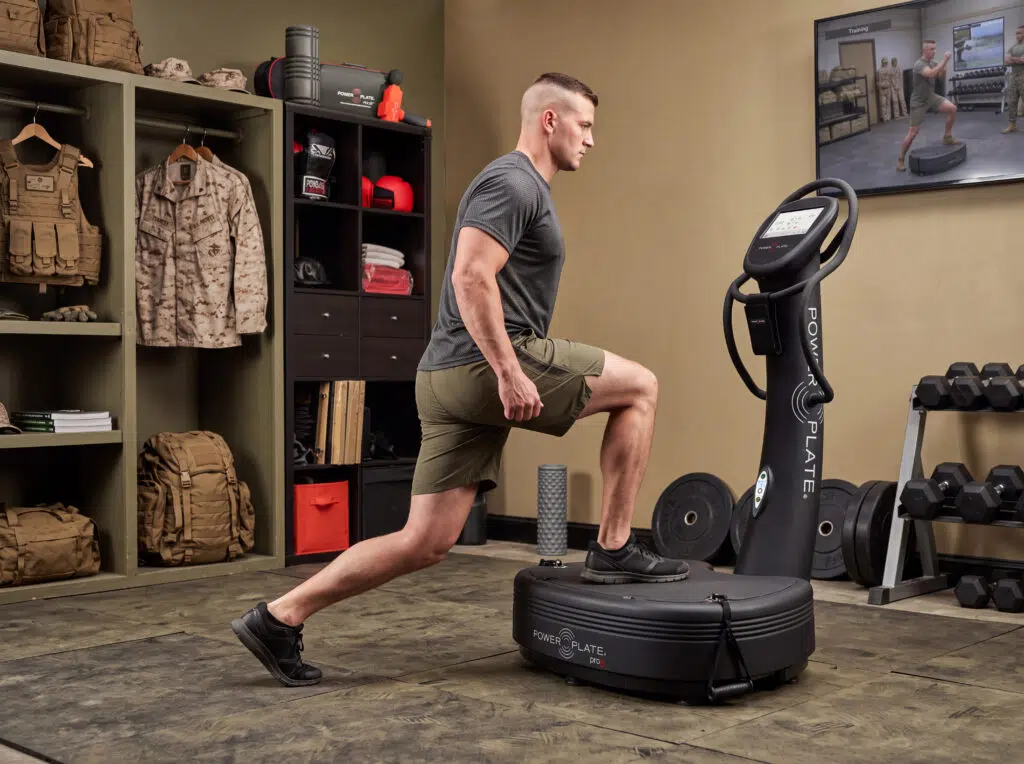
Whole-body vibration training uses a vibrating platform to create rapid mechanical signals through the body while you stand, hold positions, or perform simple exercises. The goal is to add a neural and muscular stimulus to normal training. It may help some people improve activation, balance, and strength when used in a structured way.
On its own, vibration is just a tool. Its value depends on how it is programmed, who is using it, and what it is being combined with.
What Is a Power Plate?
A Power Plate is a specific whole-body vibration device designed to deliver controlled vibration while you perform coached movements or positions. It is often used in performance, rehab, and healthy-aging settings to increase training stimulus without always increasing load. Device quality and settings matter because vibration platforms do not all deliver the same signal.
This is one reason coached use matters. Better equipment and better programming usually produce better outcomes than random exposure.
Why Healthspan Matters More Than Lifespan
Healthspan means the number of years you stay physically capable, mentally sharp, and independent, not just alive. A longer lifespan means less if movement, strength, balance, and resilience decline too early. Good longevity training should focus on staying useful, capable, and active for as many years as possible.
That is why healthspan training usually prioritizes function over gimmicks. The goal is not just to add years, but to improve the quality of those years.
Why Should Fitness Training Focus on Healthspan?
Fitness training should focus on healthspan because muscle, bone, aerobic fitness, balance, and nervous-system function all affect how well you age. Training that improves these qualities may help support independence, confidence, and daily function later in life. A body that moves well is usually easier to live in for longer.
This makes training more meaningful than chasing appearance alone. Long-term health often comes from preserving function as much as improving physique.
How Power Plate May Support Longevity Training
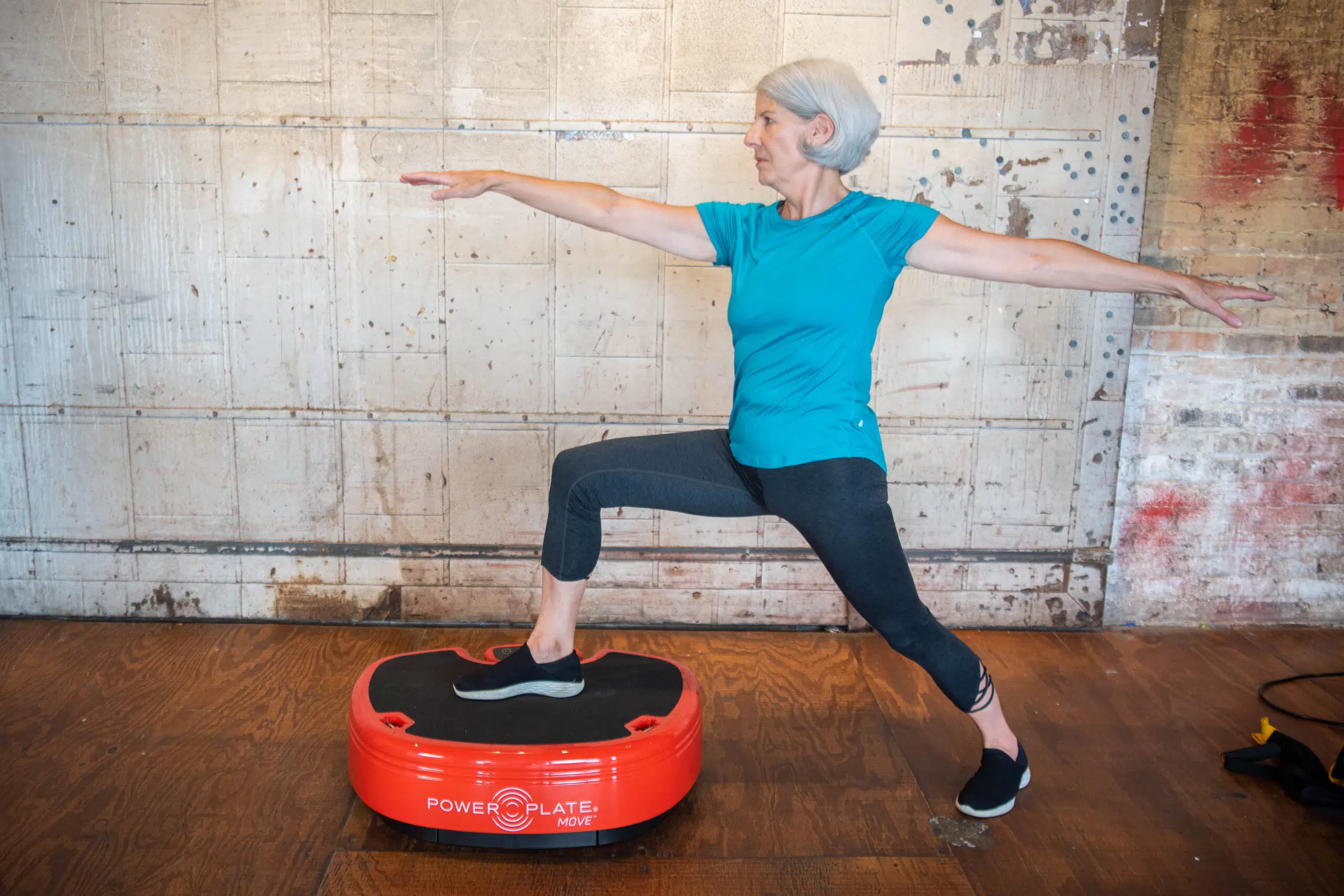
Power Plate may support longevity training by acting as a signal amplifier inside a broader fitness plan. It may increase muscular activation, challenge balance, and add useful stimulus to certain drills. Used well, it can complement strength work, conditioning, and rehab, but it works best as part of a bigger system.
How Can Vibration Training Support Strength and Stability?
Vibration training may support strength and stability by increasing muscle activation and making simple positions feel more demanding without adding heavy external load. That can be useful for warm-ups, balance work, or lower-load strength drills. It may also help some people improve body awareness and movement quality under controlled conditions.
This does not mean it replaces squats, carries, or progressive resistance. It means it may help certain people prepare or reinforce those patterns more effectively.
How Can Power Plate Fit Into Recovery or Rehab?
Power Plate may fit into recovery or rehab when the goal is to reintroduce movement, improve tissue tolerance, or challenge balance without using high loads too early. In some cases, it may help bridge the gap between gentle rehab work and more demanding strength training. The progression still needs professional judgment and careful control.
This is especially relevant for older adults or people rebuilding confidence after pain or deconditioning. Smart use matters more than intensity.
- Potential role one: Add neural stimulus without always adding heavy load.
- Potential role two: Support balance, stability, and lower-load strength drills.
- Potential role three: Complement rehab, conditioning, and recovery-focused work.
What Healthspan Markers Matter Most?
The most useful healthspan markers are usually the ones that strongly affect aging outcomes and daily function. These include aerobic capacity, lower-body power, grip strength, muscle mass, bone and balance health, and brain-body resilience. Whole-body vibration should be judged by whether it supports these bigger markers, not by novelty alone.
Why Does Aerobic Fitness Still Matter More Than Gadgets?
Aerobic fitness, often tracked through markers like VO₂ max, remains one of the strongest indicators of long-term health and resilience. Whole-body vibration may support certain parts of training, but it does not replace walking, conditioning, or proper cardio work. Your heart, lungs, and recovery systems still need real aerobic training stimulus.
This is why vibration should support a program, not become the program. The basics still do most of the heavy lifting.
Why Are Strength, Power, and Bone Health So Important?
Strength, power, and bone health matter because they influence balance, fall risk, physical independence, and the ability to keep moving well with age. Lower-body force production, grip strength, and osteogenic loading all help future-proof the body. A useful training tool should support these qualities, not distract from building them properly.
This is where vibration training may help as an add-on, especially when paired with progressive strength work and sound recovery habits.
- Cardiorespiratory fitness: Supports stamina, heart health, and recovery capacity.
- Strength and power: Help maintain function, confidence, and force production.
- Bone and balance health: May help reduce fall risk and support independence.
- Muscle mass: Supports metabolism, movement quality, and healthy aging.
When Whole-Body Vibration Can Be Useful
Whole-body vibration can be useful when it is matched to a clear purpose, such as activation, balance training, lower-load strength work, rehab support, or time-efficient conditioning. It may be especially helpful for older adults, busy clients, or people who need a coached way to add stimulus without always adding more weight.
Who May Benefit Most From Whole-Body Vibration?
People who may benefit most from whole-body vibration include older adults, deconditioned individuals, time-poor professionals, and some rehab-focused clients who need smart progression. It may also help trained clients warm up, improve movement quality, or add variety to lower-load work. The key is matching the tool to the person and the goal.
Not everyone needs vibration training, but some people may use it productively when it solves a real programming problem.
What Types of Sessions Can Include Power Plate?
Power Plate can be used inside warm-ups, mobility flows, stability drills, lower-body power work, metabolic circuits, and selected rehab sessions. It may also be layered into coached formats such as red-zone conditioning, short intervals, or osteogenic loading work. The best sessions still connect back to a wider weekly training plan.
The platform should serve the session, not dominate it. Good coaching keeps the purpose clear.
- Warm-up use: Activation, mobility, and movement preparation.
- Strength use: Lower-load support for stability and controlled tension.
- Conditioning use: Short, structured, coached interval formats.
- Healthy-aging use: Balance, bone-loading, and function-focused drills.
Why Whole-Body Vibration Is Not a Replacement for Exercise
Whole-body vibration is not a replacement for exercise because the evidence does not show it can match the full benefits of regular strength training, aerobic work, and normal physical activity. It may help support a program, but it cannot replace progressive overload, conditioning, walking, or the basic habits that drive real long-term health.
What Are the Main Limits of Whole-Body Vibration?
The main limits of whole-body vibration are that outcomes vary by device, settings, coaching quality, and user needs. Evidence is mixed, and results are usually less impressive when vibration is used in isolation. It may provide useful support, but it should not be sold as a shortcut to replace traditional training.
This matters because healthspan improves best through systems, not single tools. The platform may help, but the program matters more.
Why Does Traditional Training Still Matter Most?
Traditional training still matters most because muscle, aerobic capacity, tendon strength, and long-term physical resilience are built through repeated exposure to progressive movement, load, and recovery. Strength sessions, walking, intervals, and mobility work create broad adaptations that no platform can fully replace. These basics remain the foundation of healthy aging.
Whole-body vibration works best when it makes good training slightly better, not when it tries to replace it completely.
- Not a shortcut: Vibration does not erase the need for real exercise.
- Not enough alone: It cannot cover all the benefits of strength and cardio training.
- Best role: Use it to enhance a program that already has strong fundamentals.
How to Use Power Plate Safely and Practically
The safest way to use Power Plate is inside a structured program with sensible frequency, appropriate settings, and professional coaching when needed. Most people should treat it like a training tool, not a wellness gimmick. Safety, progression, and individual health status matter more than hype or novelty.
How Often Should You Use Whole-Body Vibration?
For many people, whole-body vibration works best when used a few times per week inside a larger routine rather than every day without structure. Short, focused sessions are often more useful than long, random exposure. The right frequency depends on your training load, age, recovery, and why you are using it in the first place.
More is not automatically better. The goal is enough stimulus to support progress without adding unnecessary fatigue or complexity.
Who Should Be More Cautious With Power Plate?
People who are pregnant, have certain medical conditions, or are managing unresolved pain or instability should be more cautious with Power Plate use. It is sensible to speak with a clinician before starting if you have health concerns. Responsible use begins with knowing when extra screening and guidance are appropriate.
This is especially important when a tool adds a novel mechanical stimulus. If symptoms are unclear, get proper advice first rather than guessing.
What Does a Practical Weekly Plan Look Like?
A practical weekly plan usually treats whole-body vibration as an add-on to strength, aerobic work, and recovery sessions rather than the center of the week. It may appear in warm-ups, short conditioning blocks, balance work, or recovery-focused sessions. The bigger weekly structure should still prioritize walking, strength, and cardiorespiratory training.
If you want guided support, a coached system like RAW Active can help place the tool inside a broader longevity plan instead of using it randomly.
- Use with purpose: Know whether the goal is activation, strength support, balance, or conditioning.
- Keep sessions short: Quality and control usually matter more than duration.
- Build around fundamentals: Strength, cardio, sleep, and nutrition still come first.
- Get help when needed: Coaching can improve safety and programming quality.
FAQ
This whole-body vibration FAQ answers the most common questions about Power Plate, longevity, and healthspan training. The main message is simple: vibration can be useful, but it works best as one part of a bigger plan. Good programming, realistic expectations, and safe use matter much more than marketing claims.
Can Whole-Body Vibration Replace Cardio or Strength Training?
No, whole-body vibration should not replace cardio or strength training. It may support certain outcomes, but it does not fully reproduce the broad benefits of regular aerobic exercise, progressive resistance training, and normal daily movement. It works best as a complementary tool, not as a substitute for foundational exercise.
Is Power Plate Good for Older Adults?
Power Plate may be useful for some older adults when it is used carefully to support balance, muscle activation, and lower-load training. It can be especially helpful when traditional training needs to be introduced gradually. Still, it should be matched to the person’s health status and combined with walking, strength, and recovery work.
How Long Does It Take to See Benefits?
How fast you notice benefits from whole-body vibration depends on your starting point, your overall training plan, and how consistently the tool is used. Some people may notice improved activation or balance early, while larger healthspan changes usually come from weeks or months of broader consistent training and recovery habits.
Should You Use Whole-Body Vibration If You Have Pain?
If you have pain, you should be careful with whole-body vibration and avoid assuming it is automatically helpful. Some people may tolerate it well under professional guidance, while others may need a different approach first. If pain is persistent, worsening, or unclear, get medical or rehab advice before adding vibration training.
Final takeaway: Use whole-body vibration and Power Plate as smart support tools, not as shortcuts. Keep your main focus on strength, aerobic fitness, balance, recovery, and consistent movement. When vibration is used with purpose inside a well-designed program, it may help you train more effectively and age more confidently.