If you go to the neighbourhood supermarket, you have definitely seen this logo before. It is the Healthier Choice Symbol (HCS) — a small mark printed on packaging that millions of shoppers glance at without a second thought. And you probably think, “That’s the Healthier Choice Symbol! So this food must be healthy for us!”
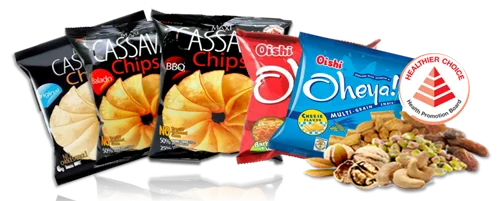
Naturally, we all think like that as well — until I saw this and almost fell off my chair.
You must be kidding. Can a symbol that promises “healthier” really be stamped on foods that look anything close to healthy? The answer is more complicated than you might expect, and it is worth understanding before your next grocery run.
What is the Healthier Choice Symbol (HCS)?
The Healthier Choice Symbol is a label awarded to food products that are generally lower in fat, saturated fat, sugar and sodium, and higher in dietary fibre, calcium and wholegrains. Today, the Healthier Choice Symbol can be seen on about 4,000 different food products, spanning across over 100 food categories such as convenience meals, sauces, beverages and breakfast cereals.
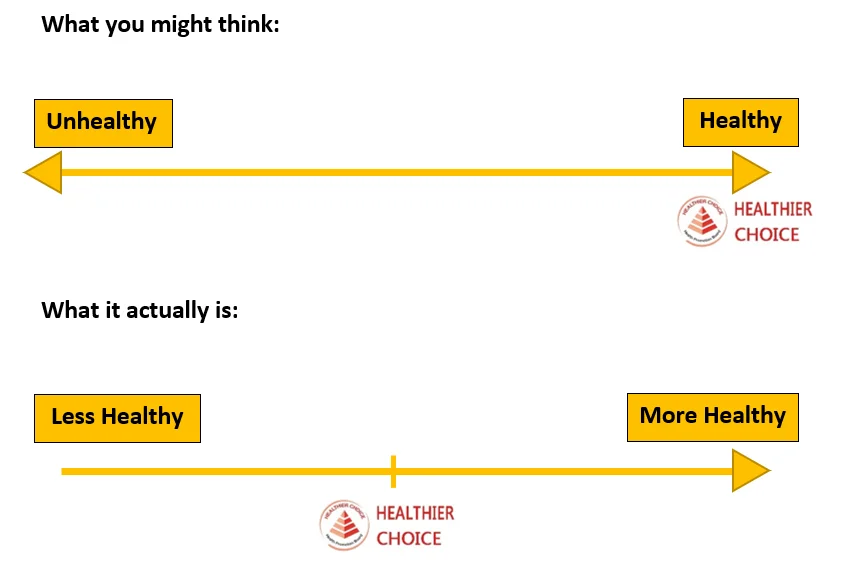
So the food should be healthy, or “the healthier choice”, isn’t it? Not really!
Here is the crucial point that most people miss: these are food products that are way better in the above criteria from the same food category. That single phrase — “the same food category” — changes everything about how you should read the symbol.
Which means that they are relatively healthier than other food in the same category, but that does not mean that they are healthy. A biscuit that is lower in sugar than other biscuits is still a biscuit. A chocolate milk that is higher in calcium than other chocolate milks is still a chocolate milk. The comparison is made against the shelf-mates, not against what your body actually needs.
We cannot deny that the food below are “Health-IER” than their counterparts:
- Higher in calcium
- Higher in wholegrains
- Lower in sodium
- Lower in sugar
- Lower in saturated fats
- Trans-fat free
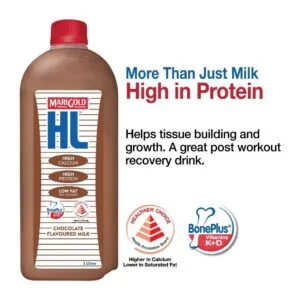
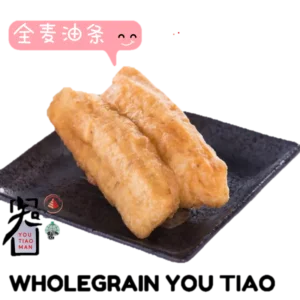
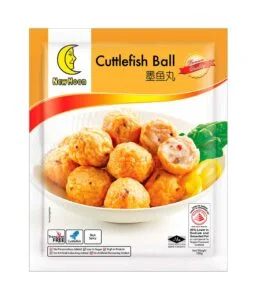
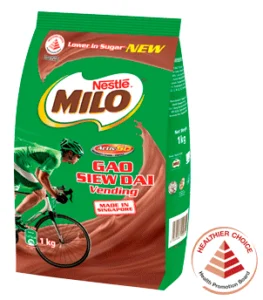
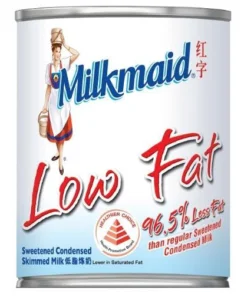
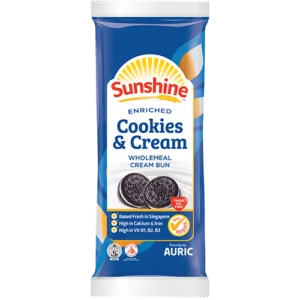
Examples of such products include chocolate milk that is higher in calcium, wholegrain you tiao that is higher in wholegrains, cuttlefish balls that are lower in sodium, Milo powder that is lower in sugar, low-fat condensed milk that is lower in saturated fat, and wholemeal cream buns that are trans-fat free. Each of these is genuinely better than its direct competitor on the shelf — and yet none of them would be mistaken for a health food.
Are They Healthy?
Do these “healthier choice” foods look healthy to you? What do these foods have in common?
The above food examples are indeed “better” as compared to the alternatives in the same food category. However, they may not be “healthy”, because they may be:
- High in calories — more calories packed into a smaller amount of food, which makes it easy to over-consume without realising it.
- Highly processed — this means they may have lost some nutritional value and are less satiating (you will not feel as full from eating them, so you end up eating more).
- Addictive — engineered to make you eat more. Nobody stops at one piece of potato chips.
- Loaded with sugar — usually energy-dense and hidden, meaning you can be eating more than you realise.
If you want to lose fat, lose weight and get healthier, food with the above criteria will make it a very difficult task. You can learn more about weight loss and the difference between fat loss and weight loss here: Understanding Fat Loss vs Weight Loss.
The Healthier Choice Symbol (HCS) is a quick method to help you make a better decision than the other food options in the same category — which can be worse for you. It is a useful tie-breaker when you are choosing between two similar processed products.
What you can learn from this article is that these foods may not be exactly healthy for you, and you can make even healthier choices than HCS-labelled food. The symbol tells you which processed food is the least bad — it does not tell you whether the food is good for you in the first place.
How You Can Make Healthy Food Choices
These are the ways that you can look out for to make healthier food choices:
- Low in processed ingredients such as palm oil and sugar
- High in fibre
- Plenty of minerals and vitamins
- Not pre-cooked or pre-processed
Can you guess what type of food these are? Hint: they often don’t come with a label.
Yes, they are whole, natural food. Food that comes in its natural state — such as rice (vs rice cakes), vegetables (vs kale chips), fresh meat (vs bacon), and so on. Whole foods are the benchmark that every packaged product should be measured against, and they are the reason a symbol designed for processed foods can never be the whole story.
But Remember — Better is Better than Perfect
Ultimately, it is about making better choices, so start by doing ONE of these steps today:
- Have more whole, natural food
- Eat more vegetables and fruits
- Have more fibrous food such as bran in wholegrains
- Eat less processed food
- If you have to eat processed food, make better choices — the HCS can be used, but learn how to read food labels (you will learn how in the next article)
You do not need to overhaul your entire diet overnight. Pick one step, master it, and move on to the next. Small, consistent improvements compound into real change — and that is exactly how lasting fat loss and better health are built.
Get Personalised Guidance for Your Health Goals
Reading labels and choosing whole foods is a great start, but nutrition is only half the picture. Our personal training allows you to meet your lifestyle needs and is flexible enough to fit into your busy schedule. Whether your goal is fat loss, weight management, or simply feeling stronger and more energetic, we can build a plan around the way you actually live. Feel free to contact us for details.

- Fitness Over 50: Build Strength, Balance, and Energy - June 10, 2026
- How Can I Get Personalized Fitness Guidance? (The Complete Guide) - April 24, 2026
- The Ultimate Guide to Personal Training in Singapore (2026 Edition) - April 21, 2026