
TL;DR: Posture matters, but not in the oversimplified way many people think. Poor posture is rarely the single cause of pain. A better approach is to improve movement quality, build strength, reduce repeated stress, and support recovery habits so the body can handle daily life and training more comfortably.
- What Is Posture?
- Does Posture Matter for Pain and Performance?
- What Is Poor Posture?
- Postural Stress vs Poor Posture
- Can You Change Your Posture?
- What Are the Physical Risks of Poor Posture?
- Best Ways to Improve Posture Without Obsessing Over It
- FAQ About Posture
What Is Posture?
Posture is not just sitting straight or standing tall. It is the body’s ongoing response to gravity, movement, habits, stress, anatomy, and environment. Good posture is dynamic, not rigid. It changes constantly as you walk, sit, train, work, recover, and adapt to the demands placed on your body.
That means posture is not one perfect shape you hold all day. It is more about how well your body manages positions over time.
Posture is influenced by strength, mobility, fatigue, confidence, pain, work setup, and movement habits. It is better understood as a living pattern than a frozen position.
Why Is Posture More Dynamic Than Most People Think?
Posture is dynamic because the body is always adjusting to load, balance, vision, breathing, and muscle activity. Even when you think you are still, small changes are happening constantly. That is why posture is better seen as a flexible system of adaptation rather than a single fixed standard everyone should copy.
This matters because rigid posture advice can create unnecessary tension. People often do better when they move more naturally and more often.
Does Posture Matter for Pain and Performance?
Posture matters, but it is rarely the only reason someone has pain. Pain is influenced by many factors, including stress, sleep, activity level, recovery, injury history, and general health. Posture can add physical stress, but its effect is often overstated when movement quality and overall load management are ignored.
In other words, posture can matter without being the main villain. A slouched position is not automatically a pain diagnosis.
For performance, posture can affect efficiency, comfort, and movement quality. That makes it worth paying attention to, but not worth obsessing over.
Can Bad Posture Directly Cause Pain?
Bad posture can contribute to discomfort, but it does not directly explain most chronic pain on its own. Many people have imperfect posture without pain, while others have pain with no obvious postural problem. Pain is usually a broader mix of tissue tolerance, stress, lifestyle, recovery, and repeated load rather than posture alone.
This is why posture should be part of the conversation, not the whole conversation. Oversimplifying pain often leads people toward the wrong fix.
Does Posture Matter for Exercise and Daily Movement?
Posture matters for exercise and daily movement because it can affect how force moves through the body, how comfortable you feel, and how well you control basic positions. Better posture habits may support stronger movement patterns, but the bigger goal is usually better function, not trying to look perfectly upright all day.
That is especially true when lifting, running, sitting for long hours, or doing repetitive work. The body usually tolerates more when it is stronger and better conditioned.

What Is Poor Posture?
Poor posture is best understood as a habitual, self-imposed position that creates unnecessary physical stress over time. It is not simply any slouch, curve, or non-ideal shape. The real issue is whether a position is repeated so often, or held so poorly, that it increases strain and reduces comfort or function.
This definition is more useful than chasing textbook alignment. It focuses on stress and tolerance rather than appearance.
Some people sit or stand in awkward positions without any problem. Others become sore because their body cannot manage the same load as easily.
Why Is Poor Posture Not Just About Slouching?
Poor posture is not just slouching because the body can tolerate many shapes if the load is varied and the tissues are strong enough. A rounded back, forward head, or uneven stance is not automatically harmful. The problem usually appears when one stressful position becomes habitual, excessive, and poorly managed over time.
This helps explain why one person can sit oddly all day and feel fine, while another feels tight after an hour. Capacity and recovery matter.
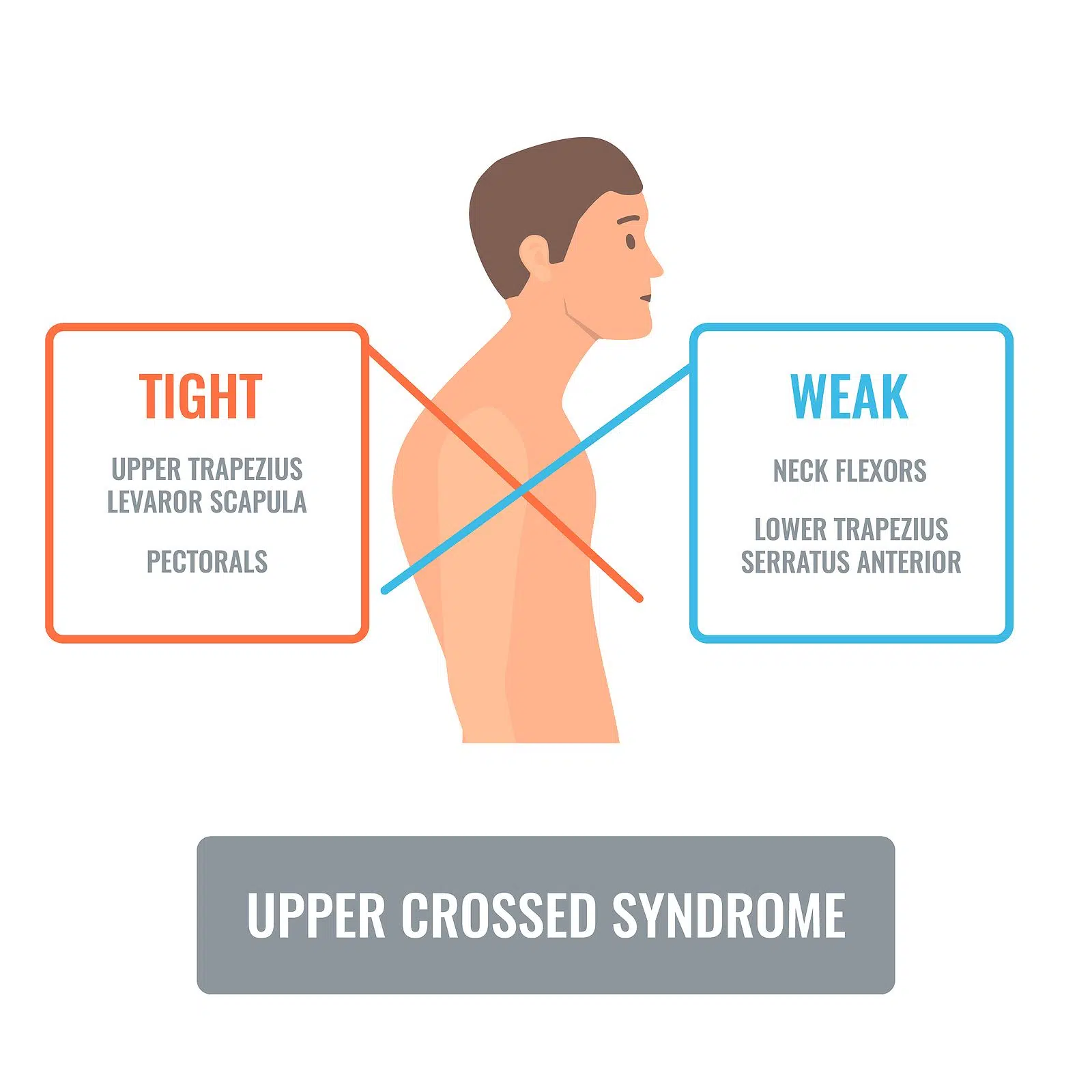
What About Upper-Crossed Syndrome and Similar Posture Theories?
Upper-Crossed Syndrome and similar posture labels are often presented too confidently despite limited practical value for many people. These models can oversimplify pain by blaming a fixed pattern of tight and weak muscles. In real life, posture and pain are usually more individual, more changeable, and less predictable than those labels suggest.
That does not mean posture patterns are meaningless. It means they should not be treated like a complete diagnosis by themselves.
Postural Stress vs Poor Posture
Postural stress is different from poor posture because it is often imposed by circumstances, not just personal habit. A poorly designed chair, long work shift, repetitive task, or awkward screen height can create stress even if someone is trying to sit well. This distinction matters when deciding what actually needs to change.
Sometimes the issue is not laziness or bad awareness. Sometimes the setup itself is the problem.
This is why environment, ergonomics, and workload deserve attention alongside posture coaching. The body adapts to what it is repeatedly asked to do.
What Is a Postural Challenge?
A postural challenge is anything that makes it harder to stay comfortable and move well, such as long desk hours, poor workstation setup, fatigue, or repetitive tasks. These challenges do not always mean your posture is “bad.” They simply increase the demand on tissues and make discomfort more likely if recovery and variation are limited.
- Desk work: Long hours in one position can overload the neck, back, or hips.
- Training fatigue: Tired muscles may hold positions less efficiently.
- Environment: Screens, seats, and workstations can shape how you move.
Why Is This Difference Important?
The difference between poor posture and postural stress is important because it changes the solution. If the problem is self-imposed habit, movement awareness and strength may help. If the problem is external load, the real fix may be changing the workstation, task duration, or recovery routine rather than endlessly trying to “sit straighter.”
This makes the advice more practical. It also reduces the blame people often place on themselves when the setup is the real issue.
Can You Change Your Posture?
You can change posture, but lasting change usually takes time, awareness, and repetition. Because posture is shaped by habits, strength, mobility, and environment, quick fixes rarely last. Better results usually come from improving how the body moves and tolerates load rather than forcing one perfect position all day.
This is why posture correction should be realistic, not obsessive. A stronger body often holds better positions more naturally.
Trying to “fix” posture without improving movement, strength, or daily habits often leads to frustration. Change works better when it fits real life.
Why Is Posture Change Hard to Maintain?
Posture change is hard to maintain because old movement patterns are automatic and tied to stress, fatigue, work demands, and body structure. Simply reminding yourself to sit straight usually fades quickly. More lasting change often happens when strength, mobility, breathing, and environment improve enough to make better positions feel easier.
That is why habit change matters as much as exercise. The body tends to return to what feels familiar and efficient in the moment.
What Are the Physical Risks of Poor Posture?
The physical risks of poor posture are usually related to repeated stress, not instant damage. Habitually overloaded positions may contribute to muscle tightness, trigger points, stiffness, and lower tolerance to daily movement. Over long periods, poor load distribution may also speed up wear in some joints, although posture alone rarely explains everything.
This is where nuance matters. Posture may raise risk without being the direct cause of all pain.
The body is usually dealing with many variables at once, including aging, training, recovery, work stress, and general health. That is why simple posture blame often misses the bigger picture.
Can Poor Posture Cause Muscle Knots and Tightness?
Poor posture may contribute to muscle knots, trigger points, and persistent tightness when certain tissues are repeatedly overloaded without enough variation or recovery. The problem is usually less about one “bad” position and more about doing the same stressful thing too often. Vulnerable tissues tend to complain first when capacity is low.
This is one reason movement breaks, strength work, and better recovery habits often help more than constant stretching alone. For a related perspective, see stretching myths.
Can Poor Posture Lead to Arthritis?
Poor posture may contribute to joint wear over time if it repeatedly places uneven stress on the same structures, but it is rarely the only factor behind arthritis. Age, genetics, previous injury, activity history, and body weight also matter. Posture may influence the rate of wear, yet it does not fully determine the outcome.
This is another reason fear-based posture messaging is unhelpful. Long-term joint health depends on more than just how upright someone looks.
Best Ways to Improve Posture Without Obsessing Over It
The best way to improve posture is to build a body that can handle daily demands better. That usually means getting stronger, moving more often, improving mobility where needed, managing stress, and changing work or training habits that overload the same tissues. Practical changes beat constant self-correction.
Good posture is often a side effect of good function. When the body is stronger and less irritated, better positions usually come more easily.
This fits a broader health model that values recovery, movement quality, and resilience. For related reading, see a holistic approach to fitness and the recovery pyramid.
What Training Strategies Help Posture Most?
The best training strategies for posture usually include strength work, mobility drills, movement variety, and exercises that improve body awareness under load. Rather than isolating posture alone, focus on making the body more capable overall. Stronger hips, trunk, upper back, and legs often support better positions in daily life and training.
- Strength training: Builds tissue capacity so positions feel easier to hold.
- Mobility work: Helps the body access positions more comfortably.
- Movement breaks: Reduce the stress of staying in one posture too long.
- Technique practice: Improves control during lifting, sitting, and standing.
What Daily Habits Help Improve Posture?
Daily habits that help posture include changing positions often, setting up your workspace better, walking more, sleeping enough, and avoiding long unbroken periods of sitting. These habits reduce repeated stress and improve recovery. Small consistent changes usually work better than trying to force perfect alignment from morning to night.
- Move often: Change position before stiffness builds up too much.
- Improve setup: Make screens, desks, and chairs work better for your body.
- Recover better: Sleep, stress management, and training balance matter.
- Build strength: A stronger body usually handles posture demands more easily.
FAQ About Posture
This posture FAQ answers common questions about pain, slouching, posture correction, and daily habits. Each answer is designed to be direct, practical, and easy to scan. That makes the section useful for readers who want quick guidance without losing the bigger message that posture is only one part of the picture.
Is Slouching Always Bad for You?
Slouching is not always bad, especially if it is brief and balanced with other movement during the day. Problems are more likely when one stressful position is repeated for too long without enough strength, variation, or recovery. The body usually tolerates many shapes better than people think, as long as load is managed well.
Should You Try to Sit Perfectly Straight All Day?
Trying to sit perfectly straight all day is usually unrealistic and often unnecessary. A better goal is to sit in a variety of positions, stand up regularly, and keep the body strong enough to tolerate normal posture changes. Comfort, variation, and capacity matter more than holding one rigid ideal shape nonstop.
Can Better Posture Improve Back or Neck Pain?
Better posture may help back or neck pain in some cases, especially when it reduces repeated stress and improves movement quality. However, pain usually has multiple causes, so posture should not be treated as the only fix. Strength, recovery, stress, sleep, and activity habits often matter just as much or more.
For related guidance, see lower back pain relief and building strength to stay pain-free.
What Is the Most Practical Way to Start Improving Posture?
The most practical way to start improving posture is to move more often, build basic strength, improve obvious workstation issues, and stop chasing perfection. Start with habits you can repeat daily instead of complicated correction drills. Better posture usually develops more naturally when the body becomes stronger, less stiff, and less overloaded.
Final takeaway: Posture matters, but not as a simple blame target. The real goal is to build a body that can move well, handle stress, and recover better. If you focus on strength, movement variety, smart habits, and overall health, posture often improves as part of the process instead of becoming a constant battle.