
TL;DR: Human posture has changed with how we live, work, move, and use technology. Good posture is not about holding one perfect shape all day. It is about moving well, changing positions often, building strength, and reducing the stress that long sitting and screen time can place on the body.
- What Is Human Posture?
- Why Has Human Posture Changed Over Time?
- How Did Early Societies Shape Human Posture?
- How Did Industrialisation Change Human Posture?
- Why Does Modern Life Create Posture Problems?
- How to Improve Posture in Real Life
- When to Get Help for Posture Issues
- FAQ
What Is Human Posture?
Human posture is the way your body holds itself when you stand, sit, walk, lift, or rest. It reflects how your muscles, joints, nervous system, and habits work together, so posture is not only about appearance; it is also about comfort, movement efficiency, and how well your body handles daily stress.
Posture is often treated like a fixed standard, but real posture changes all day. A useful goal is not “perfect posture.” A better goal is having enough strength, mobility, and awareness to move through different positions without excessive strain.
Why Does Posture Matter?
Posture matters because it can influence comfort, movement quality, breathing, and how force travels through the body during daily tasks and exercise. Good postural habits may help reduce unnecessary stress on muscles and joints, but posture is only one part of the bigger health picture.
This is why posture should be viewed as a movement issue, not just a cosmetic issue. If you want a deeper practical look, does posture matter is a useful follow-up topic.
Why Has Human Posture Changed Over Time?
Human posture has changed over time because the body adapts to how people live, move, work, and survive. The shift to upright walking, the move from active labour to seated work, and the rise of screens have all shaped how posture looks and how the spine, hips, shoulders, and neck are used.
Posture is not separate from history. It reflects the demands each era places on the body.
What Was the Role of Bipedalism?
Bipedalism, or walking on two legs, was one of the biggest changes in human physical development because it changed how the spine, pelvis, hips, and feet worked together. It allowed greater mobility and freed the hands, but it also created new balance and load-management demands for the body.
This matters because modern posture still builds on that original upright design. The body is made to move, shift weight, and work dynamically, not stay frozen in one position for hours.

How Did Early Societies Shape Human Posture?
Early societies shaped posture through daily labour, social roles, military discipline, and cultural expectations. People walked more, carried more, squatted more, and spent less time in chairs, so their posture was influenced by practical movement demands rather than by constant desk work and screen use.
In many older societies, posture also carried social meaning. Upright posture could signal strength, discipline, status, or readiness.
How Did Daily Life Affect Posture in Ancient Times?
Ancient daily life affected posture because most movement came from farming, carrying, walking, manual work, and ground-based positions. These habits likely built more varied movement patterns than many people use today, although harder physical lives also came with their own stresses and repetitive strain.
The lesson is not that the past was perfect. The lesson is that regular movement variety matters.
Why Did Military and Civilian Posture Differ?
Military posture was often trained for discipline, readiness, and uniformity, while civilian posture reflected occupation, class, tools, and lifestyle. Soldiers were taught to stand and move in controlled ways, whereas civilian posture changed more naturally with work demands, local customs, and physical environment.
This shows that posture has always been shaped by purpose. The body responds to repeated tasks, whether those tasks are marching, farming, lifting, or sitting at a laptop.
How Did Industrialisation Change Posture?
Industrialisation changed posture by shifting large numbers of people from more varied movement to repetitive work, factory routines, and eventually more seated jobs. As work became more fixed and task-specific, the body often spent longer in limited positions, which may have increased stiffness, imbalance, and movement restrictions.
This was a major turning point because the workday began to demand less natural movement and more repetition. Modern office life continued that trend.
Why Did Work Environments Matter So Much?
Work environments matter because the body adapts to what it does most often. Long hours at fixed stations, poorly set-up desks, repetitive tasks, and low movement variety can gradually shape how the neck, shoulders, spine, hips, and ankles feel and function over time.
That is why ergonomics can help, but ergonomics alone is not enough. A better chair does not fully solve a low-movement lifestyle.
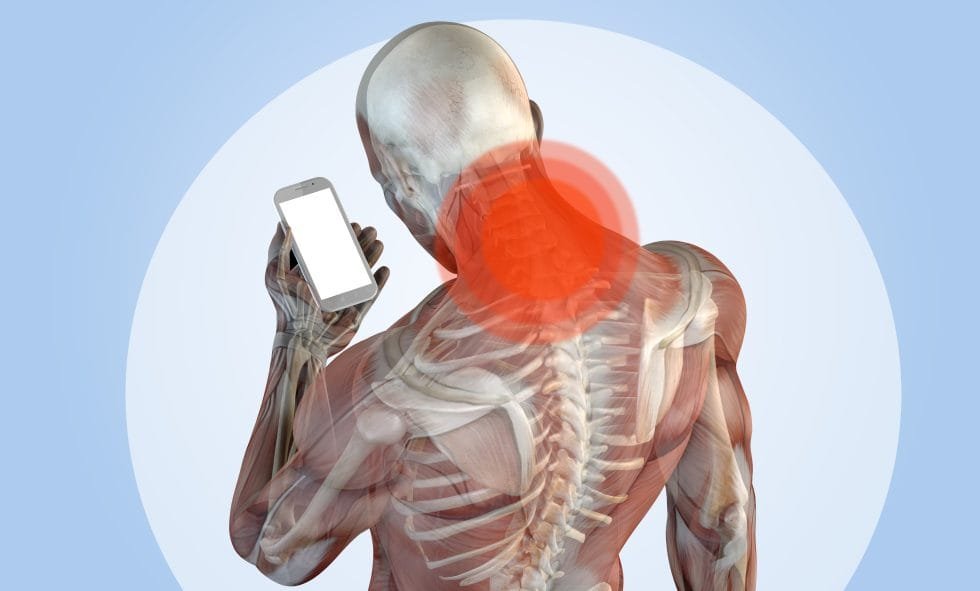
Why Does Modern Life Create Posture Problems?
Modern life creates posture problems because many people spend hours sitting, looking down at screens, typing, commuting, and moving less overall. These habits may contribute to forward head posture, rounded shoulders, hip stiffness, reduced trunk control, and a general loss of movement variety.
The issue is often not one device or one job. The issue is repeated low-variety positions with too little recovery movement.
What Is Tech Neck?
Tech neck is a common term for neck and upper-back discomfort linked to spending long periods looking down at phones, tablets, or laptops. It usually describes a pattern of forward head position, rounded upper back, and muscular tension rather than one single diagnosis or injury.
Tech neck does not mean technology is inherently harmful. It usually means the body is spending too much time in one narrow position without enough breaks, strength work, or position changes.
Can Sitting All Day Affect Posture?
Prolonged sitting can affect posture because it reduces movement variety and may leave the hips, upper back, and shoulders feeling stiff or underused. Sitting itself is not automatically bad, but sitting for long periods without movement breaks can make the body feel less adaptable and less comfortable.
This is why the goal is not to avoid sitting completely. The goal is to break it up and restore movement through the day.
Are Modern Posture Problems Only About Appearance?
Modern posture problems are not only about appearance because they often affect comfort, movement confidence, exercise quality, and tolerance to work or training. People may notice neck tightness, shoulder tension, lower-back discomfort, or reduced mobility long before they worry about how posture looks.
That is why posture work should focus on function first. Better-looking posture is often a side effect of moving better, not the main target.
How to Improve Posture in Real Life
The best way to improve posture in real life is to combine ergonomic awareness, more daily movement, strength training, mobility work, and better movement habits. Most people do not need extreme correction. They need a body that can change positions easily and hold itself well under normal daily demands.
Simple actions done consistently usually matter more than short bursts of perfect behaviour.
What Ergonomic Changes Can Help?
Ergonomic changes can help by reducing unnecessary strain during long work periods. Adjustable chairs, desk height, screen position, keyboard placement, and foot support may improve comfort, but the main goal is to make better positions easier to access rather than to lock yourself into one “perfect” setup.
- Raise the screen: Keep it closer to eye level so the neck does not stay dropped forward all day.
- Support the feet: Stable foot contact may help improve sitting balance and reduce shifting strain.
- Use movement breaks: Even a good desk setup works better when you stand, walk, and reset often.
What Exercises May Support Better Posture?
Posture-friendly exercise often includes strength work, mobility drills, breathing control, and general movement practice. Exercises that improve upper-back strength, core control, hip mobility, and overall physical capacity may help the body tolerate daily positions better and reduce the feeling of stiffness from modern routines.
- Upper-back work: Rows, face pulls, and controlled pulling patterns may support shoulder position and postural endurance.
- Core work: Dead bugs, carries, and planks may improve trunk control during daily movement.
- Hip mobility: Hip flexor stretches, split-stance mobility, and squatting patterns may help offset long sitting hours.
- Whole-body strength: A broader strength training plan often supports better posture more effectively than isolated “posture drills” alone.
Why Is a Holistic Approach Better Than Quick Fixes?
A holistic approach is better than quick fixes because posture is shaped by stress, sleep, strength, mobility, hydration, movement habits, and work setup, not by one stretch or one gadget. Long-term change usually comes from improving the whole system rather than chasing instant correction.
This is why broader lifestyle support often matters. Topics like holistic fitness and even simple habits around hydration can support better day-to-day recovery and body function.
When to Get Help for Posture Issues
You should get help for posture issues when discomfort is persistent, movement feels limited, pain keeps returning, or posture changes are affecting work, training, sleep, or confidence. Posture-related symptoms are not always simple, so proper assessment may help when self-management stops being enough.
This matters because not all pain is just “bad posture.” Sometimes the bigger issue is workload, weakness, mobility limits, stress, or an underlying injury pattern.
What Signs Mean You Should Not Ignore the Problem?
You should not ignore posture-related symptoms when they are severe, worsening, or linked to numbness, tingling, weakness, headaches, or pain that does not settle with normal rest and movement. In those cases, a proper health or rehab assessment is usually more useful than guessing or forcing more exercise.
If your symptoms include ongoing back discomfort, a practical next step may be to review guidance around lower-back pain and then seek individual support if needed.
FAQ
This human posture FAQ covers the most common questions about posture history, modern posture problems, and what people can do in daily life. The main takeaway is simple: posture changes with lifestyle, and the most helpful solution is usually better movement capacity, not chasing one rigid position.
Was human posture better in the past?
Human posture was not automatically better in the past, but older lifestyles often included more walking, carrying, squatting, and movement variety. Modern life usually includes more sitting and screen time, so posture today is shaped by lower movement diversity rather than by a weaker body design.
Is there one perfect posture?
There is no single perfect posture that every person must hold all day. A more useful target is being able to move through many positions with strength and control, then changing position often enough that no single posture creates too much stress for too long.
Can exercise really improve posture?
Exercise can improve posture when it builds strength, mobility, and awareness in the areas most affected by daily habits. It may help you tolerate sitting, standing, lifting, and training better, but results usually depend on consistency, overall activity, and how well exercise matches your actual needs.
Does posture cause all neck and back pain?
Posture does not cause all neck and back pain because pain is influenced by many factors, including workload, stress, sleep, fitness, injury history, and recovery. Posture may contribute in some cases, but it is rarely the only explanation for why discomfort develops or persists.
What is the fastest practical way to improve posture?
The fastest practical way to improve posture is usually to combine better desk setup, more movement breaks, strength training, and simple mobility work you can repeat every week. Small habits done daily often help more than dramatic correction drills that are hard to maintain.
Final takeaway: Your posture reflects how you live, not just how you stand. Move more often, build strength, improve mobility, and set up your day so your body is not stuck in the same shape for hours at a time.